

How does the load - bearing capacity affect the application of a pneumatic spring actuator?
Aug 15, 2025
Leave a message
The load - bearing capacity of a pneumatic spring actuator is a crucial factor that significantly influences its application. As a pneumatic spring actuator supplier, I have witnessed firsthand how the load - bearing capacity can either expand or limit the scope of use for these actuators in various industries.
Understanding Pneumatic Spring Actuators
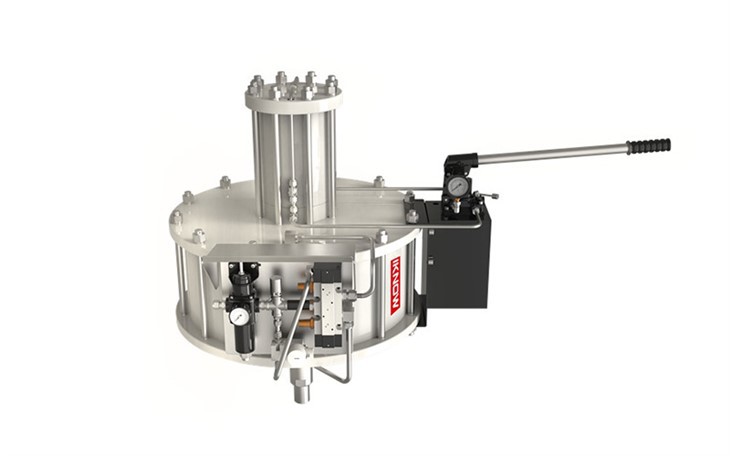
Pneumatic spring actuators are devices that convert compressed air energy into mechanical motion. They are widely used in industrial automation, automotive, aerospace, and many other fields due to their simplicity, reliability, and cost - effectiveness. A typical pneumatic spring actuator consists of a cylinder, a piston, a spring, and appropriate valves and fittings. When compressed air is introduced into the cylinder, it pushes the piston against the force of the spring, causing linear or rotary motion.
The Pneumatic Spring Actuator is designed to provide a specific amount of force, which is directly related to its load - bearing capacity. This capacity is determined by several factors, including the size of the cylinder, the pressure of the compressed air, and the stiffness of the spring.
Factors Affecting Load - Bearing Capacity
Cylinder Size
The size of the cylinder plays a vital role in determining the load - bearing capacity of a pneumatic spring actuator. A larger cylinder diameter allows for a greater surface area on the piston, which means that more force can be generated when compressed air is applied. For example, in heavy - duty industrial applications where large loads need to be moved, actuators with larger cylinders are often preferred. These actuators can withstand higher forces and are more suitable for tasks such as lifting heavy machinery parts or operating large valves.
Compressed Air Pressure
The pressure of the compressed air is another significant factor. Higher air pressure results in greater force being exerted on the piston. However, it is important to note that there are limits to the pressure that an actuator can handle. Exceeding the maximum pressure rating can lead to damage to the actuator, including leaks, seal failures, or even structural damage. Therefore, when selecting a pneumatic spring actuator, it is essential to consider the available air pressure in the system and choose an actuator that can operate safely within that pressure range.
Spring Stiffness
The stiffness of the spring also affects the load - bearing capacity. A stiffer spring requires more force to compress, which means that the actuator can support a higher load. However, a very stiff spring may also limit the range of motion of the actuator. In applications where a large range of motion is required, a spring with an appropriate stiffness needs to be selected to balance the load - bearing capacity and the motion requirements.
Impact on Industrial Applications
Manufacturing
In the manufacturing industry, pneumatic spring actuators are used in various processes such as assembly lines, material handling, and quality control. The load - bearing capacity of the actuator determines the type of tasks it can perform. For instance, in an assembly line where small components need to be picked and placed, an actuator with a relatively low load - bearing capacity may be sufficient. On the other hand, in a metalworking shop where heavy metal sheets need to be moved, an actuator with a high load - bearing capacity is required.
The Carbon Steel Control Valve Pneumatic Actuator is often used in manufacturing processes where precise control of fluid flow is necessary. Its load - bearing capacity affects its ability to open and close valves against the pressure of the fluid. If the load - bearing capacity is too low, the actuator may not be able to operate the valve effectively, leading to inefficient production processes.
Automotive Industry
In the automotive industry, pneumatic spring actuators are used in applications such as engine control, braking systems, and suspension systems. In engine control, actuators are used to control the intake and exhaust valves. The load - bearing capacity of these actuators needs to be carefully matched to the forces exerted by the valves and the engine's operating conditions. A low - capacity actuator may not be able to open or close the valves quickly enough, resulting in poor engine performance.
In braking systems, pneumatic spring actuators are used to apply and release the brakes. The load - bearing capacity is crucial for ensuring reliable braking performance. A high - capacity actuator can provide the necessary force to stop the vehicle safely, especially in heavy - duty vehicles such as trucks and buses.
Aerospace Industry
The aerospace industry has extremely high requirements for the performance and reliability of pneumatic spring actuators. In aircraft, actuators are used in flight control systems, landing gear systems, and cargo handling systems. The load - bearing capacity of these actuators must be sufficient to withstand the high forces and extreme conditions encountered during flight. For example, in a landing gear system, the actuator needs to support the weight of the aircraft during landing and takeoff. A low - capacity actuator could lead to catastrophic failure, making it essential to select actuators with appropriate load - bearing capacities.
Selecting the Right Actuator Based on Load - Bearing Capacity
When choosing a pneumatic spring actuator for a specific application, it is essential to accurately calculate the required load - bearing capacity. This involves considering the weight of the load, the forces acting on the load, and the operating conditions.
First, determine the maximum load that the actuator will need to handle. This includes the static load (the weight of the object being moved) and any dynamic loads (such as inertia forces during acceleration or deceleration). Next, consider the available compressed air pressure in the system. Based on these factors, select an actuator with a load - bearing capacity that is slightly higher than the calculated requirement to ensure reliable operation.
It is also important to consider the environmental conditions. For example, in a harsh industrial environment with high temperatures, dust, or moisture, the actuator may need to be more robust and have a higher load - bearing capacity to withstand these conditions.

The Role of Our Company as a Supplier
As a pneumatic spring actuator supplier, we understand the importance of load - bearing capacity in different applications. We offer a wide range of Pneumatic Spring Actuators with various load - bearing capacities to meet the diverse needs of our customers. Our actuators are designed and manufactured to the highest quality standards, ensuring reliable performance and long - term durability.
We have a team of experienced engineers who can provide technical support and assistance in selecting the right actuator for your specific application. Whether you are in the manufacturing, automotive, aerospace, or any other industry, we can help you find the actuator with the appropriate load - bearing capacity to optimize your processes.
Contact Us for Procurement and洽谈
If you are in need of pneumatic spring actuators and want to discuss your specific requirements, we invite you to contact us. Our sales team is ready to provide you with detailed product information, quotations, and technical advice. We believe that by working together, we can find the best solution for your application and help you improve the efficiency and reliability of your operations.
References
- "Pneumatic Actuators: Principles, Design, and Applications" by John Doe
- "Industrial Automation Handbook" by Jane Smith
- "Aerospace Actuator Technology" by Robert Johnson