


Your Leading Pneumatic Linear Actuator Supplier
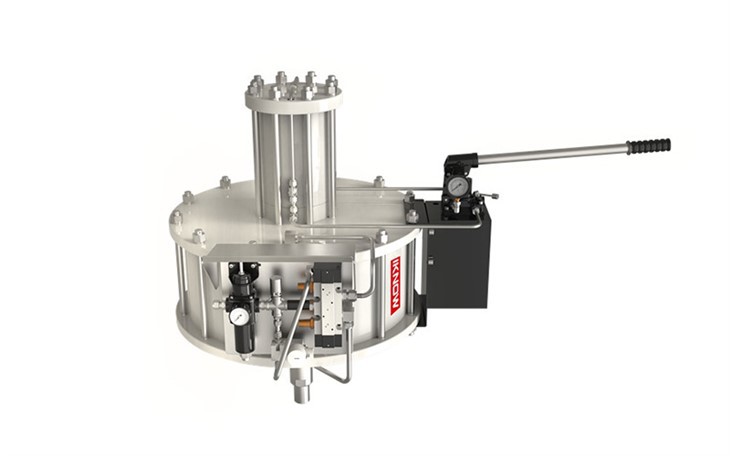
IKNOW insists on customer focus, providing one-stop pneumatic fluid solutions and personalized pneumatic actuator customization services to help customers achieve greater success. Simple, safe and sustainable, pneumatic linear actuators – or pneumatic cylinders as they are better known – provide a reliable, low-cost means of generating linear motion. As such, these industrial workhorses are used far and wide across many industrial applications. We provide excellent one-stop services including comprehensive after-sales support such as spare parts, product training, and rapid response services.


Why Choose Us?
Rich Experience
Since 2006, IKNOW has been committed to the fluid control system of pneumatic actuators. With almost two decades in the industry, we have honed our expertise to deliver exceptional solutions.
Custom Service
We offer personalized services from cylinder selection to material choice, guaranteeing stable and efficient product operation in diverse environments, tailored to customers' needs.
Quality Guaranteed
We set up a professional product performance testing and inspection center, and standardize production in strict accordance with ISO9001 management system to ensure that each product can meet the actual needs of customers.
Wide Range of Applications
Our services cover construction, bio-medicine, fire fighting, water supply and drainage, petrochemical, metallurgy, paper, power and other industries, and have won unanimous praise from customers.
Specifications of Pneumatic Linear Actuator
|
Actuator angle (adjustable range) |
Temperature range |
|
0-2000mm |
-46℃to149℃(-51℉to300℉) |
|
Maximum output torque of cylinder |
Allowable air source pressure |
|
1006763N |
2bar-10bar(29psi-145psi) |
|
Power source |
Control options |
|
Pneumatic |
Double Acting |
|
Mounting |
Certifications |
|
ISO5211 |
SIL 3,CE |
|
Optional modules |
Valve Compatibility |
|
Pneumatic accessories, brackets |
Gate valve, globe valve, exhibition valve |
|
Manual |
Customization |
|
TM3 top-mounted side-mounted manual |
Color, material, temperature |
Features of Pneumatic Linear Actuator

Accuracy. Pneumatic actuators routinely have positional errors of 0.1 in. and repeatability within .001 in.

Temperature resistance. Pneumatic actuators can withstand temperatures from −40°F to 250°F (−14°C to 120°C).

Safety. Pneumatic actuators do not use hazardous materials, so they pose no environmental or health hazards. They also do not use a motor so there is no possible magnetic interference, which lets them meet requirements for explosion protection and machine safety.
Low cost. The lightweight, durable actuators cost less than comparable hydraulic and electric versions. They also require little maintenance.
Precautions for Using Pneumatic Linear Actuator
Protocols for Start-up and Shut-down
This would prevent accidents, and the best way to do that is by setting clear start-up and shut-down procedures.
Before starting a system, operators should always check for leaks, make sure pressure is within operating limits, and ensure that all safety components are properly operating, such as pressure relief valves.
Air Pressure Monitoring
Continuously check the air pressure inside the system. The attainment of pressures beyond the limits may lead to hazardous malfunction. Digital pressure gauges, sensors, and alarms can help operators track the pressure in real time to avoid over-pressurization.
Emergency Stop
All the pneumatic systems should have a provision for an emergency stop right where it is easily accessible to avoid injury to operators in an event of malfunctioning and also allows them to cut the power supply in an emergency without posing any damage.
Applications of Pneumatic Linear Actuator
Bending and clamping
Compact pneumatic cylinders employ direct pressure to extend and retract a piston rod. This action is commonly used to impart bending and clamping functions in various automated manufacturing processes. In such cases, the benefit of using compact pneumatic cylinders is that they offer a lighter, space-saving, more configurable actuation method that doesn't sacrifice control, power or efficiency.
Valve actuation
Pneumatic linear actuators are often used with rising-stem valves to modulate the opening mechanism. They are commonly employed to control diaphragm and piston valves. With a diaphragm valve, air pressure moves the diaphragm up or down depending on whether the valve is normally open or closed. Piston actuators use the available air pressure to deliver the appropriate actuating force for the valve.
Material handling
Rodless pneumatic cylinders provide an optimal solution for material handling applications, such as pick-and-place processes in the food and beverage industry. These space-saving pneumatic linear actuators feature a piston connected to an external carriage by a magnetic or mechanical coupling system. Characterised by their long stroke, rodless cylinders are perfect for quickly, efficiently and precisely moving loads on a linear path.
Injection moulding
Pneumatic injection moulding involves injecting a specified amount of molten thermoplastic material under pressure into a mould. Pneumatic injection moulding machines regularly employ a double-acting pneumatic actuator to inject the molten plastic. In such applications, a flow control valve controls the airflow into the cylinder, while a directional control valve controls the direction of the piston movement.
Punching and pressing
Pneumatic punching machines use high-pressure gas from a compressor to create the downward force needed for punching metal and non-metal pipes and plates. The compressed air is conveyed through a pipeline to a solenoid valve, which the operator controls using a foot pedal. This engages the cylinder to exert the ensuing punching motion. Using pneumatics makes the whole process simpler, safer and more efficient.
Ordering Process
Buyer sends inquiry
1
>>
Buyer receives quotation
2
>>
Order confirmation
3
>>
Buyer sends deposit
4
>>
Seller prepares
5
Packaging & Shipping
Packaging details: Protective film, standard export carton or wooden case.

FAQ
We're well-known as one of the leading pneumatic linear actuator manufacturers and suppliers in China. Please feel free to wholesale high quality pneumatic linear actuator from our factory. For price consultation, contact us.
linear motion actuator, pneumatic actuator for automation, pneumatic actuator for production