

What are the standards and regulations for fail open pneumatic actuators?
Sep 16, 2025
Leave a message
In the realm of industrial automation and control systems, fail open pneumatic actuators play a crucial role. As a trusted supplier of fail open pneumatic actuators, I am well - versed in the standards and regulations that govern these essential components. In this blog, I will delve into the key aspects of the standards and regulations for fail open pneumatic actuators, providing valuable insights for industry professionals and potential customers.
Understanding Fail Open Pneumatic Actuators
Before we explore the standards and regulations, it's important to have a clear understanding of what fail open pneumatic actuators are. These actuators are designed to open a valve or perform a specific function when there is a loss of air pressure, electrical power, or in the event of a system failure. They are commonly used in applications where safety and continuity of operation are paramount, such as in chemical processing plants, oil and gas refineries, and water treatment facilities.
Fail open pneumatic actuators operate based on the principles of pneumatic power. Compressed air is used to generate the force required to move the actuator's piston or diaphragm, which in turn controls the position of a valve. When the air pressure drops below a certain level, a spring or other mechanical device within the actuator causes the valve to open, ensuring that the process can continue in a safe and controlled manner.
Industry Standards for Fail Open Pneumatic Actuators
There are several international and national standards that govern the design, manufacturing, and performance of fail open pneumatic actuators. These standards ensure that the actuators meet the necessary quality, safety, and performance requirements.
ISO Standards
The International Organization for Standardization (ISO) has developed a series of standards related to pneumatic actuators. ISO 5210 is one of the most important standards in this area. It specifies the mounting dimensions for quarter - turn actuators, which are commonly used in fail open applications. This standard ensures that the actuators can be easily installed on valves, regardless of the manufacturer, promoting interchangeability and compatibility.
ISO 15216 is another relevant standard. It focuses on the determination of the microbiological and chemical safety of plastics and other materials used in contact with food. While this may seem less directly related to the actuator's core function, it is crucial in applications where the actuators are used in food and beverage processing plants, as it ensures that the materials used in the actuator do not contaminate the food products.
ANSI Standards
The American National Standards Institute (ANSI) also has a set of standards that apply to pneumatic actuators. ANSI B16.34, for example, covers the design and construction of valves. Since fail open pneumatic actuators are often used in conjunction with valves, compliance with this standard is essential to ensure proper operation and compatibility. ANSI/ISA - 75.05.01 provides standards for the control valve capacity equations, which are important for sizing the actuators correctly to ensure they can provide the necessary force to operate the valve.
European Standards
In Europe, the European Committee for Standardization (CEN) has developed standards such as EN 15714 - 2, which provides requirements for pneumatic actuators for industrial valves. These standards take into account the specific needs and regulations within the European market, including safety and environmental requirements.
Regulations Governing Fail Open Pneumatic Actuators
In addition to industry standards, there are also various regulations that affect the use of fail open pneumatic actuators. These regulations are often related to safety, environmental protection, and industry - specific requirements.
Safety Regulations
Safety is a top priority in industries where fail open pneumatic actuators are used. In the United States, the Occupational Safety and Health Administration (OSHA) has regulations that require employers to provide a safe working environment. This includes ensuring that all equipment, including pneumatic actuators, is properly maintained and inspected to prevent accidents.
In the European Union, the Machinery Directive (2006/42/EC) applies to pneumatic actuators. This directive sets out the essential health and safety requirements for machinery, including the need for proper risk assessment, safety guards, and clear instructions for use.
Environmental Regulations
Environmental regulations also play a role in the use of fail open pneumatic actuators. For example, in the chemical and oil and gas industries, there are regulations regarding the prevention of leaks and emissions. Actuators must be designed and maintained to minimize the risk of air or fluid leaks, which could have a negative impact on the environment.
The Restriction of Hazardous Substances Directive (RoHS) in the European Union restricts the use of certain hazardous substances in electrical and electronic equipment. While pneumatic actuators are not strictly electrical or electronic, some components within the actuators may be subject to this directive, ensuring that the actuators are environmentally friendly.
Performance Requirements and Testing
To ensure that fail open pneumatic actuators meet the standards and regulations, they must undergo rigorous performance testing.
Force and Torque Testing
One of the key performance requirements is the ability of the actuator to generate the necessary force or torque to operate the valve. Force testing involves measuring the force exerted by the actuator at different air pressures and positions. Torque testing is important for quarter - turn actuators and measures the rotational force required to open and close the valve.
Cycle Life Testing
Cycle life testing is used to determine the durability of the actuator. The actuator is subjected to a large number of opening and closing cycles to simulate its long - term use. This testing helps to identify any potential wear and tear issues and ensures that the actuator can operate reliably over an extended period.
Leak Testing
Leak testing is crucial to prevent the loss of air or fluid from the actuator. There are different methods of leak testing, including pressure decay testing and bubble testing. These tests ensure that the actuator is properly sealed and that there are no leaks that could affect its performance or pose a safety risk.
Comparison with Other Types of Actuators
It's also useful to compare fail open pneumatic actuators with other types of actuators, such as Direct Acting Actuator, Fail Close Pneumatic Actuator, and Air Piston Actuator.
Direct acting actuators operate in a straightforward manner, directly converting the input signal into mechanical motion. They are often used in simple applications where a direct and immediate response is required. Fail close pneumatic actuators, on the other hand, are designed to close the valve when there is a loss of power or air pressure, which is the opposite of fail open actuators. Air piston actuators use a piston to generate the force, and they are known for their high force output and reliability.
Each type of actuator has its own advantages and disadvantages, and the choice between them depends on the specific application requirements, safety considerations, and cost - effectiveness.

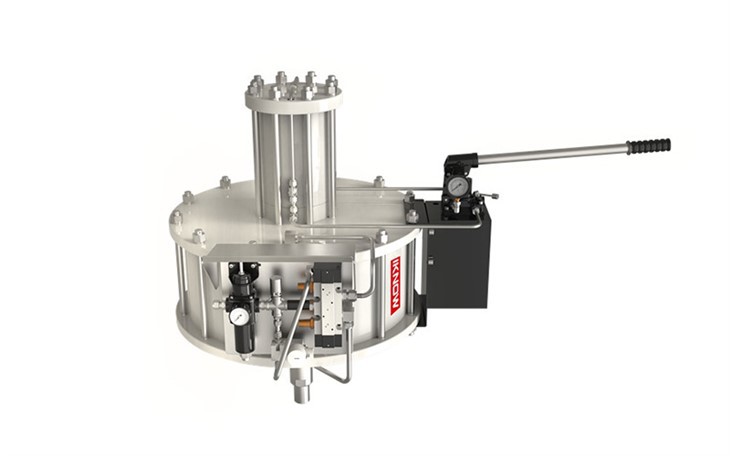
Why Choose Our Fail Open Pneumatic Actuators
As a supplier of fail open pneumatic actuators, we take pride in offering high - quality products that meet or exceed all relevant standards and regulations. Our actuators are designed and manufactured using the latest technology and materials, ensuring reliable performance and long service life.
We have a team of experienced engineers who can provide technical support and assistance in selecting the right actuator for your specific application. Whether you are in the chemical, oil and gas, or food and beverage industry, we can offer customized solutions to meet your unique needs.
Contact Us for Procurement
If you are in the market for fail open pneumatic actuators and are looking for a reliable supplier, we invite you to contact us. Our team is ready to discuss your requirements, provide detailed product information, and assist you in the procurement process. We are committed to providing the best products and services to our customers, and we look forward to working with you to ensure the success of your projects.
References
- ISO 5210: Mounting dimensions for rotary actuators for valves
- ISO 15216: Determination of the microbiological and chemical safety of plastics and other materials in contact with food
- ANSI B16.34: Valves - Flanged, Threaded, and Welding End
- ANSI/ISA - 75.05.01: Control Valve Capacity Equations
- EN 15714 - 2: Pneumatic actuators for industrial valves
- OSHA Regulations: Occupational Safety and Health Administration standards
- Machinery Directive (2006/42/EC): European Union directive on machinery safety
- RoHS Directive: Restriction of Hazardous Substances Directive in the European Union