

What is the air consumption of a manual pneumatic actuator?
Sep 29, 2025
Leave a message
Hey there! As a supplier of manual pneumatic actuators, I often get asked about the air consumption of these nifty devices. So, I thought I'd sit down and write a blog post to break it all down for you.
First off, let's talk about what a manual pneumatic actuator is. In simple terms, it's a device that uses compressed air to create linear or rotary motion. These actuators are widely used in various industries, from manufacturing to automation, because they're reliable, cost - effective, and relatively easy to maintain.
Now, the big question: what is the air consumption of a manual pneumatic actuator? Well, it's not a one - size - fits - all answer. The air consumption of a manual pneumatic actuator depends on several key factors.
Factors Affecting Air Consumption
1. Actuator Size
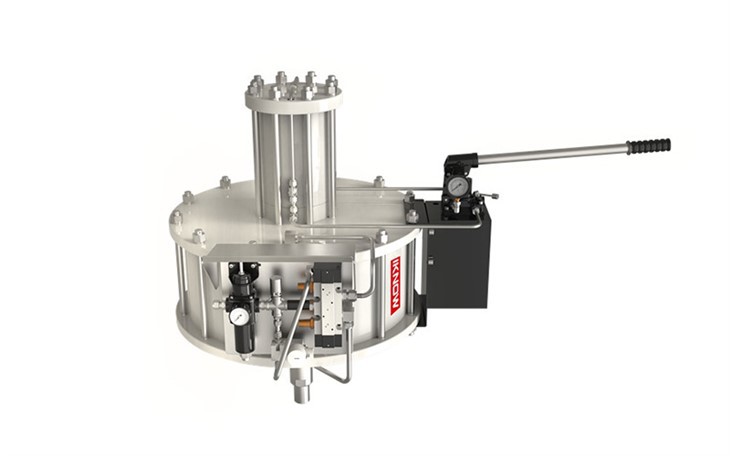
Bigger actuators generally consume more air. This is because they have a larger volume to fill with compressed air to achieve the desired motion. For example, a large - scale Air Piston Actuator used in heavy - duty industrial applications will need a significant amount of air to move its piston and perform its function. On the other hand, a smaller actuator used in a more delicate operation, like in a laboratory setting, will consume less air.
2. Stroke Length
The stroke length refers to the distance the actuator moves. A longer stroke length means that the actuator has to move a greater distance, and thus, it requires more air to fill the space and complete the movement. If you have an actuator with a short stroke, say a few millimeters, it won't need as much air as an actuator with a stroke length of several centimeters or even meters.
3. Operating Pressure
The pressure at which the actuator operates also plays a huge role in air consumption. Higher operating pressures mean that more air is forced into the actuator to maintain that pressure. If you're running your Non - standard Double Acting Pneumatic Actuator at a very high pressure, it will consume more air compared to running it at a lower, more moderate pressure.
4. Cycle Frequency
How often the actuator cycles, or moves back and forth, is another important factor. If an actuator is constantly in use, cycling multiple times per minute, it will consume more air over time than an actuator that only cycles occasionally. For instance, in a high - speed production line, the actuators are cycling rapidly, and this high cycle frequency leads to increased air consumption.
Calculating Air Consumption
Calculating the air consumption of a manual pneumatic actuator isn't always straightforward, but there are some basic formulas and methods you can use.

The most common way to estimate air consumption is by using the formula for the volume of a cylinder (since many actuators work on a piston - cylinder principle). The volume of a cylinder is given by (V=\pi r^{2}h), where (r) is the radius of the piston and (h) is the stroke length.
Let's say you have a Pneumatic Piston Actuator with a piston radius of 5 cm and a stroke length of 10 cm. First, calculate the volume of the cylinder:
[
\begin{align*}
V&=\pi r^{2}h\
&=\pi\times(5)^{2}\times10\
&= 250\pi\space cm^{3}\
&\approx 785.4\space cm^{3}
\end{align*}
]
This is the volume of air required to move the piston for one full stroke. But remember, this is just a basic calculation and doesn't take into account factors like operating pressure and losses due to leaks.
In real - world scenarios, you also need to consider the efficiency of the actuator. No actuator is 100% efficient, and there will always be some air losses due to factors like friction, leakage around seals, and the design of the actuator itself.
Importance of Understanding Air Consumption
Understanding the air consumption of your manual pneumatic actuator is crucial for several reasons.
1. Cost Savings
If you know how much air your actuator is consuming, you can optimize your compressed air system. Compressed air is not free; it takes energy to produce. By reducing unnecessary air consumption, you can lower your energy costs and save money in the long run.
2. System Design
When designing a pneumatic system, knowing the air consumption of each actuator helps you size your air compressors and other components correctly. If you underestimate the air consumption, your system may not work properly, and the actuators may not perform as expected. On the other hand, overestimating can lead to the installation of oversized and expensive equipment.
3. Maintenance and Reliability
Monitoring air consumption can also help you detect problems early. A sudden increase in air consumption could indicate a leak in the system or a problem with the actuator itself. By catching these issues early, you can perform maintenance and prevent more serious breakdowns.
Tips to Reduce Air Consumption
Here are some tips to help you reduce the air consumption of your manual pneumatic actuators:
1. Proper Sizing
Make sure you choose the right - sized actuator for your application. Don't go for an oversized actuator just because you think it will be more powerful. An oversized actuator will consume more air than necessary.
2. Regular Maintenance
Keep your actuators well - maintained. Replace worn - out seals and gaskets to prevent air leaks. A small leak can lead to a significant amount of wasted air over time.
3. Optimize Operating Pressure
Find the optimal operating pressure for your actuator. Running it at a higher pressure than necessary will only increase air consumption without providing any real benefit.
4. Use Energy - Efficient Components
Invest in energy - efficient pneumatic components. Newer models of actuators are designed to be more efficient and consume less air while still providing the same level of performance.
Conclusion
So, there you have it! The air consumption of a manual pneumatic actuator is influenced by factors like actuator size, stroke length, operating pressure, and cycle frequency. By understanding these factors, calculating air consumption, and taking steps to reduce it, you can save money, improve system performance, and ensure the reliability of your pneumatic systems.
If you're in the market for a manual pneumatic actuator or have any questions about air consumption, feel free to reach out. We're here to help you make the best choice for your application and ensure that your pneumatic systems run smoothly and efficiently.
References
- Pneumatic Systems Handbook, various industry experts
- Manufacturer's manuals for manual pneumatic actuators