

What is the vibration resistance of a pneumatic gate valve with side handwheel?
Jan 16, 2026
Leave a message
Hey there! As a supplier of pneumatic gate valves with side handwheels, I often get asked about the vibration resistance of these valves. It's a crucial factor, especially in industrial settings where vibrations can be a real pain in the neck. So, let's dive right into it and figure out what makes these valves stand up to vibrations.
First off, let's understand what a pneumatic gate valve with side handwheel is. It's a type of valve that uses compressed air to open and close the gate, which controls the flow of fluid through a pipeline. The side handwheel is an added feature that allows for manual operation in case of a pneumatic system failure. You can check out more about it here: Pneumatic Gate Valve with Side Handwheel.
Now, when it comes to vibration resistance, several factors come into play. The design of the valve is the first thing to consider. A well - designed pneumatic gate valve with side handwheel has a sturdy construction. The body of the valve is usually made from high - quality materials like cast iron, stainless steel, or carbon steel. These materials are known for their strength and durability, which helps the valve withstand vibrations.
The internal components also play a big role. The gate, stem, and seat are carefully engineered to fit together precisely. A tight fit between these components reduces the chances of rattling or loosening due to vibrations. For example, the stem is often machined to a high tolerance, ensuring smooth movement and a secure connection to the gate.
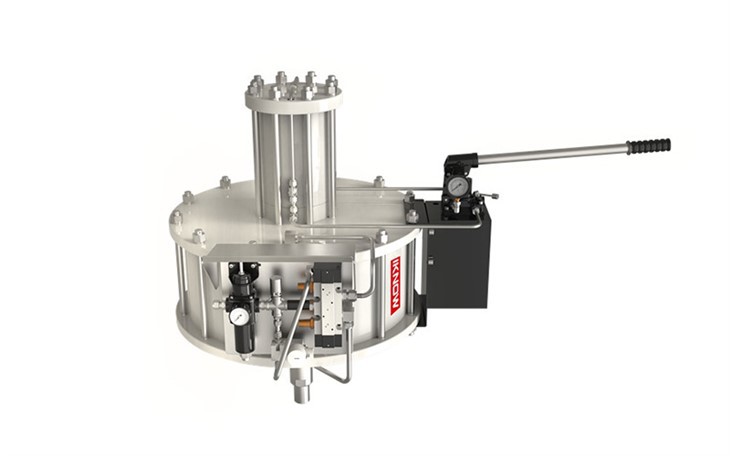

Another important aspect is the actuator. In our valves, we often use a Fail Open Pneumatic Actuator. This type of actuator is designed to operate reliably even in harsh conditions. It has a robust housing that protects its internal mechanisms from being affected by vibrations. The actuator's piston and cylinder are also built to be stable, with proper sealing to prevent air leakage that could be caused by vibrations.
The side handwheel is not just for manual operation; it also contributes to the valve's vibration resistance. The handwheel is attached securely to the valve stem. This connection helps to stabilize the stem and reduces the movement that could be caused by vibrations. It acts as an additional support point, keeping the internal components in place.
Let's talk about how vibrations can affect a valve. In a high - vibration environment, a poorly designed valve can experience several problems. The first is wear and tear. Vibrations can cause the internal components to rub against each other more than normal, leading to premature wear. This can result in leaks, reduced flow control, and eventually, valve failure.
Another issue is loosening of fasteners. Bolts and nuts that hold the valve together can come loose due to vibrations. If this happens, the valve's integrity is compromised, and it may not function properly. In some cases, it can even pose a safety hazard.
However, our pneumatic gate valves with side handwheels are designed to minimize these risks. We conduct extensive testing to ensure that our valves can handle vibrations. We simulate different levels of vibrations in our testing facilities, mimicking the conditions they might face in real - world applications.
In industries like oil and gas, power generation, and chemical processing, where vibrations are common, our valves have proven to be reliable. For instance, in a power plant, there are many pumps and turbines that generate vibrations. Our valves can be installed in the pipelines without worrying too much about the vibrations affecting their performance.
The Air Piston Actuator used in our valves also helps in dealing with vibrations. The piston moves smoothly within the cylinder, and the air pressure is evenly distributed. This balanced operation reduces the impact of vibrations on the actuator's performance.
We also take into account the installation of the valve. Proper installation is key to ensuring good vibration resistance. The valve should be mounted on a stable surface, and the piping should be properly supported. If the valve is installed incorrectly, it can be more susceptible to vibrations.
When it comes to maintenance, regular checks are essential. We recommend inspecting the valve for any signs of wear, loose fasteners, or air leaks. By doing so, you can catch any potential problems early and prevent them from turning into major issues.
In conclusion, the vibration resistance of a pneumatic gate valve with side handwheel is a result of its well - thought - out design, high - quality materials, and reliable components. Our valves are built to last, even in high - vibration environments.
If you're in the market for a pneumatic gate valve with side handwheel, we'd love to have a chat with you. Whether you have questions about vibration resistance or any other features, we're here to help. Contact us to start a procurement discussion and find the perfect valve for your needs.
References
- Valve Design and Engineering Handbook
- Industrial Pneumatic Systems Manual