

What kind of valves can be driven by a pneumatic piston actuator?
Jan 07, 2026
Leave a message
As a leading supplier of pneumatic piston actuators, I'm often asked about the types of valves that can be effectively driven by these actuators. Pneumatic piston actuators are renowned for their reliability, high thrust output, and quick response times, making them suitable for a wide range of valve applications. In this blog post, I'll explore the various types of valves that can be paired with pneumatic piston actuators and discuss their benefits and applications.
Ball Valves
Ball valves are one of the most common types of valves used in industrial applications, and they can be easily driven by pneumatic piston actuators. A ball valve consists of a spherical disc with a hole in the middle, which rotates to control the flow of fluid through the valve. When the hole in the ball is aligned with the flow path, the valve is open, allowing fluid to pass through. When the ball is rotated 90 degrees, the hole is perpendicular to the flow path, and the valve is closed, blocking the flow of fluid.
Pneumatic piston actuators are well-suited for ball valves because they can provide the high torque required to rotate the ball quickly and accurately. This makes ball valves with pneumatic piston actuators ideal for applications where rapid on-off control is required, such as in applications where the flow of fluid needs to be stopped or started quickly, or in applications where precise flow control is required. Additionally, ball valves are known for their tight shut-off capabilities, which can be further enhanced when paired with a pneumatic piston actuator.
Butterfly Valves
Butterfly valves are another popular type of valve that can be driven by pneumatic piston actuators. A butterfly valve consists of a disc that rotates on a shaft to control the flow of fluid through the valve. When the disc is parallel to the flow path, the valve is open, allowing fluid to pass through. When the disc is rotated 90 degrees, it blocks the flow path, and the valve is closed.
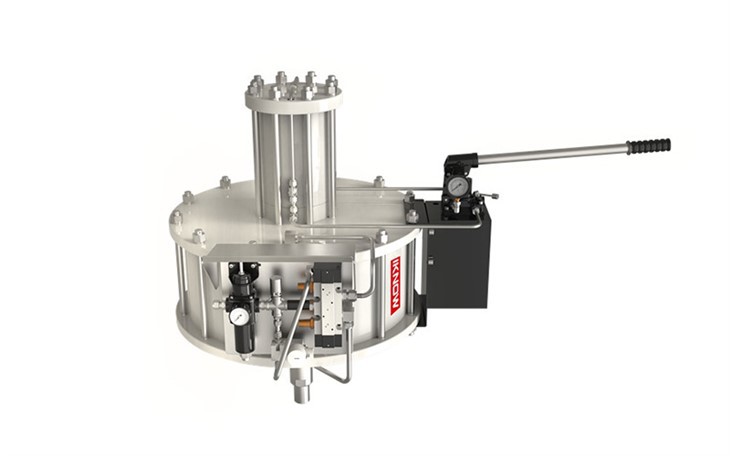

Pneumatic piston actuators are a good choice for butterfly valves because they can provide the necessary torque to rotate the disc smoothly and quickly. This allows for fast and accurate control of the flow rate, making butterfly valves with pneumatic piston actuators suitable for applications where throttling control is required, such as in HVAC systems, water treatment plants, and chemical processing industries. Additionally, butterfly valves are relatively lightweight and compact, which makes them easy to install and maintain.
Globe Valves
Globe valves are a type of valve that uses a plug or disc to control the flow of fluid through a valve. The plug or disc is moved up and down by a stem to open or close the valve. Globe valves are often used in applications where precise flow control is required, such as in steam systems, boiler feedwater applications, and chemical processing.
Pneumatic piston actuators can be used to drive globe valves, providing the necessary force to move the plug or disc up and down. Pneumatic Globe Valve with Top Handwheel is an example of a product that combines a pneumatic piston actuator with a globe valve. The top handwheel allows for manual operation of the valve in case of a power failure or other emergency. Pneumatic piston actuators can provide precise control over the position of the plug or disc, allowing for accurate flow regulation. This makes globe valves with pneumatic piston actuators suitable for applications where fine-tuning of the flow rate is necessary.
Diaphragm Valves
Diaphragm valves use a flexible diaphragm to control the flow of fluid through the valve. The diaphragm is moved up and down by a stem to open or close the valve. Diaphragm valves are often used in applications where the fluid being handled is corrosive, abrasive, or contains solids, as the diaphragm provides a tight seal and protects the valve internals from the fluid.
Pneumatic piston actuators can be used to drive diaphragm valves, providing the force needed to move the diaphragm. The quick response time of pneumatic piston actuators allows for rapid opening and closing of the valve, which is beneficial in applications where fast shut-off is required. Additionally, the high thrust output of pneumatic piston actuators ensures that the diaphragm can be fully seated, providing a reliable seal.
Gate Valves
Gate valves are used to start or stop the flow of fluid in a pipeline. They consist of a gate or wedge that is moved up and down to open or close the valve. Gate valves are typically used in applications where a full-bore opening is required and where the valve is either fully open or fully closed.
Pneumatic piston actuators can be used to drive gate valves, providing the necessary force to lift or lower the gate. The high thrust output of pneumatic piston actuators allows for the quick and efficient operation of gate valves, even in large-diameter pipelines. However, it's important to note that gate valves are not suitable for throttling applications, as the gate can cause excessive wear and damage when used in a partially open position.
Benefits of Using Pneumatic Piston Actuators with Valves
- High Thrust Output: Pneumatic piston actuators can generate high levels of thrust, making them suitable for driving large and heavy valves. This allows for the reliable operation of valves in high-pressure and high-flow applications.
- Quick Response Time: Pneumatic piston actuators can respond quickly to control signals, enabling rapid opening and closing of valves. This is essential in applications where fast shut-off or precise flow control is required.
- Reliability: Pneumatic piston actuators are known for their reliability and durability. They have a simple design with few moving parts, which reduces the risk of failure and requires minimal maintenance.
- Versatility: Pneumatic piston actuators can be used with a wide range of valve types and sizes, making them a versatile choice for various industrial applications.
- Safety: In the event of a power failure or loss of air supply, pneumatic piston actuators can be configured to fail in a safe position, such as fail-closed or fail-open. Fail Close Pneumatic Actuator is an example of a safety - conscious product. This helps to prevent accidents and protect equipment and personnel.
Considerations When Selecting a Pneumatic Piston Actuator for a Valve
- Torque Requirements: The torque required to operate the valve must be determined accurately to select a pneumatic piston actuator with sufficient power. This depends on factors such as the valve size, type, and operating pressure.
- Stroke Length: The stroke length of the actuator must match the movement required to open and close the valve. Different valve types have different stroke requirements, so it's important to choose an actuator with the appropriate stroke length.
- Air Supply: The actuator requires a reliable air supply at the correct pressure and flow rate. The air quality should also be considered, as contaminants in the air can cause damage to the actuator.
- Environmental Conditions: The operating environment of the valve and actuator should be taken into account. Factors such as temperature, humidity, and the presence of corrosive substances can affect the performance and lifespan of the actuator.
As a pneumatic piston actuator supplier, I understand the importance of providing high - quality products and reliable service. If you're looking for a pneumatic piston actuator to drive your valves, or if you have any questions about valve - actuator compatibility, I encourage you to contact me for a discussion. We can work together to select the most suitable actuator for your specific application and ensure that you get the best performance and value from your investment.
References
- "Valve Handbook" by J. F. Monahan
- "Pneumatic Actuators: Design and Application" by various industry experts