

Can a pneumatic gate valve with side handwheel be used for gas and liquid applications?
May 12, 2025
Leave a message
A pneumatic gate valve with a side handwheel is a specialized piece of equipment that combines the advantages of pneumatic operation and manual control. This type of valve is often used in various industrial applications, but a common question is whether it can be used for both gas and liquid applications. In this blog post, I'll delve into this question as a supplier of pneumatic gate valves with side handwheels.
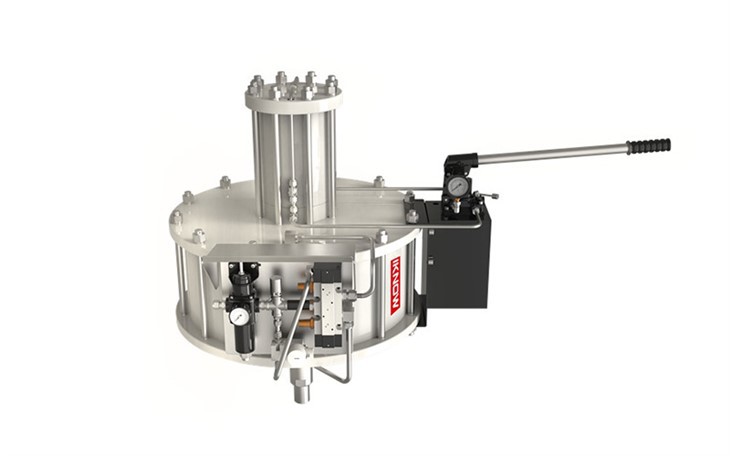
Working Principle of Pneumatic Gate Valve with Side Handwheel
Before discussing its application in gas and liquid scenarios, let's understand how a pneumatic gate valve with a side handwheel works. The valve mainly consists of a gate, valve body, pneumatic actuator, and a side - handwheel. The pneumatic actuator, such as an Air Piston Actuator, uses compressed air to drive the gate to open or close the valve. When there is a power failure or the pneumatic system malfunctions, the side handwheel can be used to manually operate the valve, ensuring continuous control over the fluid flow.

Suitability for Gas Applications
Advantages
- Tight Shut - off: In gas applications, it is crucial to prevent gas leakage. Pneumatic gate valves with side handwheels are designed to provide a tight shut - off. The gate fits snugly against the valve seats, minimizing the risk of gas escaping even under high - pressure conditions. For example, in natural gas pipelines, a reliable shut - off valve is essential to ensure safety and prevent gas wastage.
- Quick Operation: Pneumatic actuation allows for rapid opening and closing of the valve. This is particularly important in gas applications where quick response times are needed to prevent over - pressure situations or to isolate sections of the pipeline in case of an emergency. For instance, in a gas processing plant, when there is a sudden increase in pressure, the pneumatic gate valve can be quickly closed to protect the equipment.
- Manual Backup: The side handwheel provides an important manual backup. In the event of a pneumatic system failure, operators can still use the handwheel to open or close the valve. This is especially valuable in gas applications where uninterrupted flow control is critical, such as in a gas storage facility.
Considerations
- Corrosion and Erosion: Some gases may contain corrosive components, such as hydrogen sulfide in natural gas. This can cause corrosion of the valve components over time. Therefore, appropriate materials need to be selected for the valve body, gate, and seats. For example, stainless steel or special alloy materials can be used to resist corrosion.
- Flow Characteristics: Gas has different flow characteristics compared to liquids. The valve design needs to be optimized to ensure smooth gas flow and minimize pressure drop. A well - designed pneumatic gate valve with a side handwheel can achieve this by having a streamlined internal structure.
Suitability for Liquid Applications
Advantages
- High - Pressure Handling: In many liquid applications, such as in oil pipelines or water treatment plants, high - pressure fluids need to be controlled. Pneumatic gate valves with side handwheels are capable of withstanding high pressures due to their robust construction. The gate and valve body are designed to handle the forces exerted by the high - pressure liquid.
- Versatility: They can be used for a wide range of liquids, including water, oil, and various chemical solutions. The valve materials can be selected according to the properties of the liquid. For example, for corrosive chemicals, valves made of corrosion - resistant materials like PTFE - lined valves can be used.
- Reliable Operation: Similar to gas applications, the combination of pneumatic and manual operation provides reliable control. The pneumatic actuator can quickly adjust the valve position based on the process requirements, and the side handwheel can be used for fine - tuning or in case of actuator failure.
Considerations
- Cavitation and Erosion: When the liquid flow velocity is high or the pressure drops suddenly, cavitation may occur. Cavitation can cause erosion of the valve components, reducing the valve's service life. To prevent this, proper valve sizing and flow control strategies need to be implemented.
- Viscosity: Different liquids have different viscosities. For highly viscous liquids, the valve design needs to ensure that the gate can move smoothly without getting stuck. A well - lubricated valve mechanism and an appropriate gate design can help overcome the challenges posed by high - viscosity liquids.
Comparing Gas and Liquid Applications
- Sealing Requirements: In gas applications, the sealing requirements are often more stringent because even a small amount of gas leakage can be dangerous and costly. In liquid applications, while leakage should also be minimized, the consequences of a small leak may not be as severe as in gas applications.
- Flow Behavior: Gas is compressible, while liquid is generally considered incompressible. This difference in flow behavior affects the valve design and operation. For gas, the valve needs to be designed to handle the expansion and contraction of the gas, while for liquid, the focus is more on preventing cavitation and ensuring smooth flow.
Our Product Offerings
As a supplier of pneumatic gate valves with side handwheels, we offer a wide range of products to meet different application requirements. Our valves are equipped with high - quality Fail Open Pneumatic Actuator and Manual Pneumatic Actuator options. We use advanced manufacturing techniques and high - quality materials to ensure the reliability and durability of our valves. Whether you need a valve for gas or liquid applications, we can provide a customized solution based on your specific needs.

Contact for Procurement
If you are interested in our pneumatic gate valves with side handwheels for your gas or liquid applications, please feel free to contact us for procurement discussions. We have a team of experts who can provide you with detailed product information, technical support, and competitive pricing.
References
- Perry, R. H., & Green, D. W. (1997). Perry's Chemical Engineers' Handbook. McGraw - Hill.
- Walas, S. M. (1990). Chemical Process Equipment: Selection and Design. Butterworth - Heinemann.