

How to control the speed of a manual pneumatic actuator?
Jan 09, 2026
Leave a message
Hey there! As a supplier of manual pneumatic actuators, I've gotten tons of questions about controlling the speed of these nifty devices. In this blog, I'm gonna share some practical tips and tricks on how to do just that.
First off, let's understand what a manual pneumatic actuator is. It's a device that uses compressed air to generate mechanical motion. These actuators are super versatile and are used in all sorts of industries, from manufacturing to automation. They're great because they're relatively simple, reliable, and cost - effective.
Now, why would you want to control the speed of a manual pneumatic actuator? Well, different applications require different speeds. For example, in a precision manufacturing process, you might need a slow and steady movement to ensure accuracy. On the other hand, in a high - speed assembly line, you'd want a fast - paced operation.
1. Adjusting the Air Supply Pressure
One of the most straightforward ways to control the speed of a manual pneumatic actuator is by adjusting the air supply pressure. The basic principle here is that the higher the air pressure, the faster the actuator will move. Conversely, a lower air pressure will result in a slower movement.
To adjust the air pressure, you'll need a pressure regulator. This device allows you to increase or decrease the pressure of the compressed air flowing into the actuator. Most pressure regulators have a simple knob or dial that you can turn to make the adjustments.
When you're using a pressure regulator, start by setting it at a low pressure and gradually increase it while observing the actuator's movement. This way, you can find the optimal pressure for your specific application. However, be careful not to exceed the maximum pressure rating of the actuator, as this can cause damage.
2. Using Flow Control Valves
Flow control valves are another essential tool for speed control. These valves regulate the amount of air flowing into and out of the actuator. By restricting the airflow, you can slow down the movement of the actuator.
There are two main types of flow control valves: needle valves and throttle valves. Needle valves offer very precise control over the airflow. They have a small, tapered needle that can be adjusted to fine - tune the flow rate. Throttle valves, on the other hand, are more suitable for applications where you need to make quick and rough adjustments to the airflow.

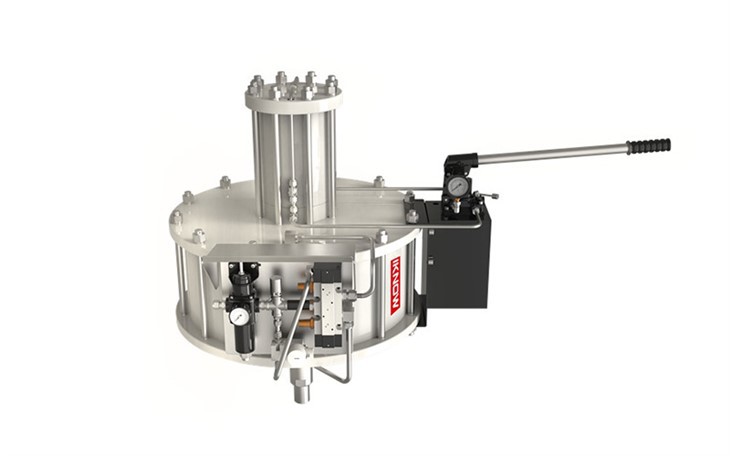
When installing flow control valves, make sure to place them as close to the actuator as possible. This helps to minimize the volume of air between the valve and the actuator, which improves the response time of the speed control.
3. Considering the Load
The load on the actuator also plays a significant role in its speed. A heavier load will generally slow down the movement of the actuator, even if the air pressure and airflow are set correctly. So, when you're trying to control the speed, you need to take the load into account.
If you're dealing with a heavy load, you might need to increase the air pressure or adjust the flow control valves to compensate for the additional resistance. You can also consider using a more powerful actuator that's better suited for the load.
4. Choosing the Right Actuator Type
The type of manual pneumatic actuator you choose can also affect its speed. There are different types available, such as Non - standard Spring Return Pneumatic Actuator, Air Piston Actuator, and Non - standard Double Acting Pneumatic Actuator.
Spring return pneumatic actuators use a spring to return the actuator to its original position. These actuators tend to have a slower return speed compared to double - acting actuators, which use compressed air for both the forward and backward strokes.
Air piston actuators are known for their high - speed operation and are often used in applications where quick movements are required. Double - acting pneumatic actuators offer more flexibility in terms of speed control, as you can adjust the air pressure and airflow for both the forward and backward strokes.
5. Maintenance and Lubrication
Proper maintenance and lubrication of the manual pneumatic actuator are crucial for consistent speed control. Over time, dirt, debris, and wear can affect the performance of the actuator, leading to inconsistent speeds.
Regularly clean the actuator to remove any dirt or debris that might be clogging the air passages. Also, make sure to lubricate the moving parts of the actuator according to the manufacturer's recommendations. Using the right lubricant can reduce friction and ensure smooth operation, which in turn helps with speed control.
6. Testing and Calibration
Once you've made all the necessary adjustments, it's important to test and calibrate the actuator. You can do this by running the actuator through a few cycles and measuring the speed of its movement. There are various tools available for measuring speed, such as tachometers or encoders.
If the speed is not within the desired range, go back and make further adjustments to the air pressure, flow control valves, or other settings. Keep testing and adjusting until you achieve the optimal speed for your application.
Contact for Purchase and Consultation
If you're looking for high - quality manual pneumatic actuators or need more in - depth advice on speed control, we're here to help. Whether you're a small - scale manufacturer or a large industrial enterprise, we have the products and expertise to meet your needs. Don't hesitate to reach out to us for a consultation and to discuss your specific requirements. We can provide you with detailed product information, pricing, and delivery options.
References
- Pneumatic Systems Handbook, various editions
- Industrial Pneumatic Actuator Manuals from leading manufacturers