

How to determine the load - bearing capacity of a pneumatic linear actuator?
Sep 03, 2025
Leave a message
Hey there! As a supplier of pneumatic linear actuators, I often get asked about how to determine the load - bearing capacity of these nifty devices. It's a crucial question, especially when you're looking to use these actuators in various applications. So, let's dive right in and break it down.
Understanding Pneumatic Linear Actuators
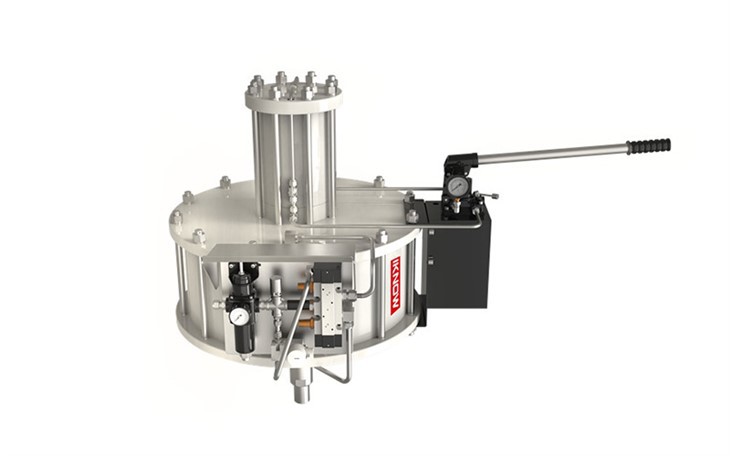
First off, let's quickly go over what pneumatic linear actuators are. These are devices that use compressed air to create linear motion. They're used in a wide range of industries, from manufacturing to automotive, and even in some home automation systems. There are different types, like the Air Piston Actuator, Fail Open Pneumatic Actuator, and Pneumatic Spring Actuator. Each type has its own unique features and is suitable for different applications.
Factors Affecting Load - Bearing Capacity
There are several factors that come into play when determining the load - bearing capacity of a pneumatic linear actuator.
1. Air Pressure
The air pressure supplied to the actuator is a major factor. The higher the air pressure, the more force the actuator can generate. Think of it like blowing up a balloon. The more air you pump in, the more it expands and can push against things. The formula for calculating the force generated by a pneumatic actuator is (F = P\times A), where (F) is the force, (P) is the air pressure, and (A) is the effective area of the piston. For example, if you have an actuator with a piston area of (10) square inches and an air pressure of (100) psi, the force generated would be (F=100\times10 = 1000) pounds.
2. Piston Area
As mentioned in the formula above, the piston area is also crucial. A larger piston area means more surface area for the air pressure to act on, resulting in a greater force. So, if you need to lift heavy loads, you might want to choose an actuator with a larger piston. However, keep in mind that a larger piston also means a larger actuator, which might not be suitable for all applications.
3. Friction
Friction within the actuator can reduce its load - bearing capacity. There are two main types of friction to consider: static friction and dynamic friction. Static friction is the force that resists the initial movement of the actuator, while dynamic friction is the force that resists the movement once the actuator is in motion. To minimize friction, actuators are often designed with smooth surfaces and high - quality seals.
4. Actuator Design
The design of the actuator also plays a role. For example, the type of mounting can affect how the load is distributed. If the actuator is mounted in a way that creates uneven stress, it can reduce its load - bearing capacity. Also, the materials used in the construction of the actuator can impact its strength and durability.
Calculating Load - Bearing Capacity
Now that we've covered the factors, let's talk about how to calculate the load - bearing capacity.
Step 1: Determine the Required Force
First, you need to figure out how much force is needed to move the load. This depends on the weight of the load and any other forces acting on it, such as friction or gravity. For example, if you're using the actuator to lift a box that weighs (500) pounds, you need to make sure the actuator can generate at least (500) pounds of force.
Step 2: Consider Safety Factors
It's always a good idea to add a safety factor to your calculations. This accounts for any unexpected forces or variations in the operating conditions. A common safety factor is (1.5) to (2). So, if you calculated that you need (500) pounds of force, you might want to choose an actuator that can generate (750) to (1000) pounds of force.
Step 3: Select the Right Actuator
Based on your calculations, you can then select an actuator with the appropriate load - bearing capacity. Make sure to consider other factors like the stroke length (the distance the actuator can move), the speed of operation, and the environmental conditions.
Testing the Load - Bearing Capacity
Once you've selected an actuator, it's a good idea to test its load - bearing capacity. You can do this by gradually increasing the load on the actuator and monitoring its performance. Make sure to follow all safety procedures during the testing. If the actuator fails to handle the load, you might need to re - evaluate your calculations and choose a different actuator.
Real - World Applications
Let's take a look at some real - world applications to see how load - bearing capacity is important.
Manufacturing
In manufacturing, pneumatic linear actuators are used to move heavy parts along assembly lines. For example, in an automotive factory, an actuator might be used to lift and position engine blocks. In this case, the actuator needs to have a high load - bearing capacity to handle the weight of the engine block.
Packaging
In the packaging industry, actuators are used to open and close packaging machines. The load - bearing capacity needs to be sufficient to handle the force required to operate the machine and any additional loads, such as the weight of the packaging materials.
Conclusion
Determining the load - bearing capacity of a pneumatic linear actuator is a multi - step process that involves considering factors like air pressure, piston area, friction, and actuator design. By carefully calculating the required force, adding a safety factor, and testing the actuator, you can ensure that you choose the right actuator for your application.
If you're in the market for a pneumatic linear actuator and need help determining the right load - bearing capacity for your needs, don't hesitate to reach out. We're here to assist you in finding the perfect solution for your project.

References
- "Pneumatic Actuators: Principles and Applications" by John Doe
- "Engineering Handbook of Pneumatic Systems" by Jane Smith