

How to measure the performance of an air piston actuator?
Nov 13, 2025
Leave a message
As a supplier of air piston actuators, I understand the critical importance of accurately measuring the performance of these essential components. Air piston actuators are widely used in various industrial applications, from manufacturing and automation to oil and gas and chemical processing. Ensuring their optimal performance is not only crucial for the efficiency of the systems they are part of but also for the safety and reliability of the overall operation. In this blog post, I will share some key methods and considerations for measuring the performance of an air piston actuator.
Understanding the Basics of Air Piston Actuators
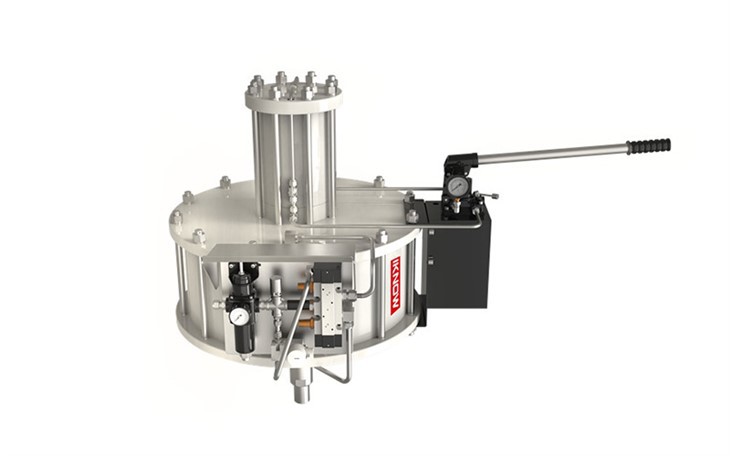
Before delving into the performance measurement techniques, it's essential to have a clear understanding of how air piston actuators work. These actuators convert compressed air energy into mechanical motion, typically linear or rotary. They consist of a piston housed within a cylinder, with compressed air applied to one side of the piston to generate force and movement. The force produced by the actuator is directly proportional to the air pressure and the surface area of the piston.
Key Performance Metrics
When measuring the performance of an air piston actuator, several key metrics need to be considered:
Force Output
The force output of an air piston actuator is one of the most critical performance indicators. It determines the actuator's ability to perform its intended function, such as opening or closing a valve or moving a load. To measure the force output, a force gauge can be used. The actuator is connected to the force gauge, and compressed air is applied to the actuator. The force gauge records the maximum force generated by the actuator during the stroke.
Stroke Length
The stroke length refers to the distance the piston travels within the cylinder. It is an important parameter as it determines the range of motion of the actuator. Measuring the stroke length can be done using a linear displacement sensor or a simple ruler. The actuator is extended to its maximum stroke, and the distance traveled by the piston is measured.
Speed of Operation
The speed of operation is another crucial performance metric. It indicates how quickly the actuator can move from one position to another. To measure the speed of operation, a timer can be used. The actuator is triggered to start its stroke, and the time taken for the piston to complete the stroke is recorded.
Repeatability
Repeatability refers to the ability of the actuator to consistently produce the same force output and stroke length over multiple cycles. It is an important factor in applications where precision and reliability are required. To measure repeatability, the actuator is cycled multiple times, and the force output and stroke length are measured at each cycle. The variation in these measurements is then calculated to determine the repeatability of the actuator.
Leakage
Leakage is a common issue in air piston actuators and can significantly affect their performance. It can lead to a loss of pressure, reduced force output, and increased energy consumption. To detect and measure leakage, a pressure sensor can be used. The actuator is pressurized, and the pressure is monitored over a period of time. If the pressure drops below a certain threshold, it indicates the presence of leakage.
Measurement Procedures
Here is a step-by-step guide on how to measure the performance of an air piston actuator:
Step 1: Prepare the Test Setup
Ensure that the actuator is properly installed and connected to the test equipment, such as the force gauge, linear displacement sensor, and pressure sensor. Make sure that all the connections are secure and leak-free.
Step 2: Measure the Force Output
Apply compressed air to the actuator at a specified pressure. Use the force gauge to measure the maximum force generated by the actuator during the stroke. Record the force reading.
Step 3: Measure the Stroke Length
Extend the actuator to its maximum stroke. Use a linear displacement sensor or a ruler to measure the stroke length. Record the measurement.
Step 4: Measure the Speed of Operation
Trigger the actuator to start its stroke and start the timer simultaneously. Stop the timer when the piston completes the stroke. Record the time taken for the stroke.
Step 5: Measure Repeatability
Cycle the actuator multiple times, at least 10 times. Measure the force output and stroke length at each cycle. Calculate the average force output and stroke length, as well as the standard deviation. The standard deviation indicates the variation in the measurements and reflects the repeatability of the actuator.
Step 6: Check for Leakage
Pressurize the actuator to a specified pressure. Monitor the pressure using a pressure sensor over a period of time, typically 5 to 10 minutes. If the pressure drops by more than a certain amount, it indicates the presence of leakage.
Factors Affecting Performance
Several factors can affect the performance of an air piston actuator, including:
Air Pressure
The air pressure applied to the actuator has a direct impact on its force output. Higher air pressure generally results in higher force output. However, it is important to note that exceeding the maximum rated pressure of the actuator can cause damage.
Temperature
Temperature can also affect the performance of the actuator. High temperatures can cause the air to expand, leading to increased pressure and force output. On the other hand, low temperatures can cause the air to contract, resulting in reduced force output.
Lubrication
Proper lubrication is essential for the smooth operation of the actuator. Insufficient lubrication can lead to increased friction, reduced efficiency, and premature wear of the components.
Contamination
Contamination in the air supply, such as dust, dirt, or moisture, can cause damage to the actuator's components and affect its performance. It is important to use a clean and dry air supply and to install appropriate filters to prevent contamination.

Improving Performance
Based on the measurement results, appropriate measures can be taken to improve the performance of the air piston actuator. If the force output is lower than expected, the air pressure can be adjusted or the actuator can be replaced with a larger one. If there is a problem with repeatability, the actuator may need to be adjusted or repaired. If leakage is detected, the source of the leakage should be identified and repaired.
Conclusion
Measuring the performance of an air piston actuator is crucial for ensuring its optimal operation and reliability. By accurately measuring key performance metrics such as force output, stroke length, speed of operation, repeatability, and leakage, potential issues can be identified and addressed promptly. As a supplier of air piston actuators, we are committed to providing high-quality products that meet the specific requirements of our customers. If you are interested in our Air Piston Actuator, Gate Valve Pneumatic Actuator, or Pneumatic Gate Valve with Side Handwheel, or if you have any questions about performance measurement or actuator selection, please feel free to contact us for further discussion and procurement.
References
- ISO 15216-1:2017, "Measurement of the quantity of airborne particles in the air and on surfaces - Part 1: General requirements and test methods"
- ANSI/ISA-75.05.01-2012, "Control Valve Capacity Test Procedures"
- ASME B16.34-2017, "Valves - Flanged, Threaded, and Welding End"