

What are the industry standards for air piston actuators?
Dec 24, 2025
Leave a message
As a seasoned supplier of air piston actuators, I've witnessed firsthand the pivotal role these devices play in various industrial applications. Air piston actuators are essential components in many systems, providing reliable and efficient linear or rotary motion. In this blog post, I'll delve into the industry standards that govern air piston actuators, offering insights into why these standards are crucial and how they impact the performance and safety of these actuators.
Understanding Air Piston Actuators
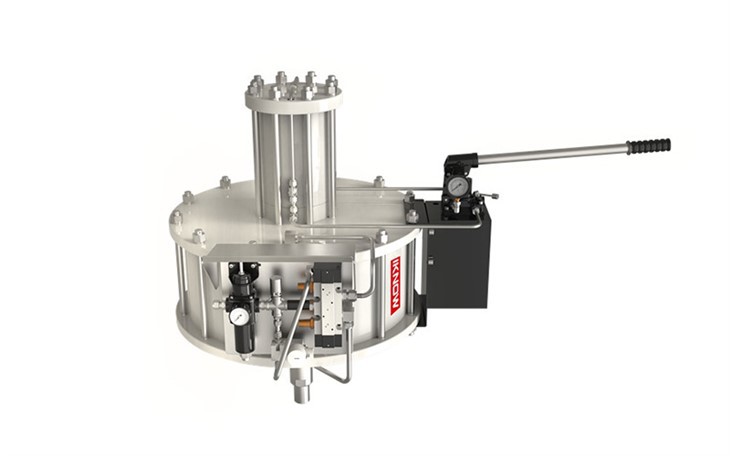
Before we dive into the industry standards, let's briefly understand what air piston actuators are. An Air Piston Actuator is a device that converts compressed air energy into mechanical motion. It typically consists of a piston inside a cylinder, where the pressure of the compressed air moves the piston, which in turn generates linear or rotary motion. These actuators are widely used in industries such as manufacturing, automotive, aerospace, and more due to their simplicity, reliability, and cost - effectiveness.
Key Industry Standards
ISO Standards
The International Organization for Standardization (ISO) has developed a series of standards that are widely recognized and adopted in the air piston actuator industry. ISO 5211, for example, focuses on the mounting dimensions of valve actuators. This standard ensures that actuators can be easily and interchangeably mounted on valves, regardless of the manufacturer. By adhering to ISO 5211, manufacturers can guarantee that their air piston actuators will fit standard valve interfaces, which simplifies the installation process for end - users.
ISO 15218 deals with the safety requirements for pneumatic systems, including air piston actuators. It covers aspects such as pressure ratings, material selection, and protection against hazards like over - pressure and leakage. Compliance with ISO 15218 is crucial for ensuring the safety of both the actuator and the overall system in which it is installed.
NAMUR Standards
The NAMUR (Normenarbeitsgemeinschaft für Mess- und Regeltechnik in der Chemischen Industrie) standards are also highly relevant in the air piston actuator industry, especially in the chemical and process industries. NAMUR standards define the interface dimensions and electrical connections for positioners and solenoid valves used with actuators. For instance, NAMUR VDI/VDE 3845 specifies the dimensions and mounting details for solenoid valves, which are often used to control the air flow in air piston actuators. This standardization allows for easy integration of different components, improving the overall efficiency and reliability of the control system.
ASME Standards
The American Society of Mechanical Engineers (ASME) has standards that are applicable to air piston actuators, particularly in the context of pressure vessels and piping systems. ASME Boiler and Pressure Vessel Code (BPVC) sets rules for the design, fabrication, and inspection of pressure - containing components, including the cylinders of air piston actuators. Compliance with ASME standards ensures that the actuators can withstand the specified pressure levels without failure, which is essential for the safe operation of industrial processes.
Importance of Industry Standards
Compatibility and Interchangeability
One of the primary benefits of industry standards is the compatibility and interchangeability of air piston actuators. When different manufacturers adhere to the same standards, end - users can easily replace or upgrade actuators in their systems without having to make significant modifications. This reduces downtime and maintenance costs, as well as provides more flexibility in system design.
Safety
Safety is a top priority in any industrial application. Industry standards set clear guidelines for the design, manufacturing, and testing of air piston actuators to ensure that they can operate safely under various conditions. For example, standards related to pressure ratings and material selection help prevent actuator failures that could lead to accidents, such as leaks or explosions.

Quality Assurance
Standards also serve as a benchmark for quality assurance. Manufacturers that comply with industry standards are more likely to produce high - quality air piston actuators. These standards often require rigorous testing procedures, such as pressure testing, leakage testing, and performance testing. By meeting these requirements, manufacturers can demonstrate the reliability and durability of their products.
Our Company's Commitment to Standards
As a supplier of air piston actuators, we are fully committed to meeting and exceeding industry standards. Our manufacturing processes are designed to ensure strict compliance with ISO, NAMUR, and ASME standards. We use high - quality materials and advanced manufacturing techniques to produce actuators that are reliable, safe, and efficient.
For example, our Direct Acting Actuator is designed in accordance with ISO 5211 for easy valve mounting. We also conduct comprehensive testing on all our products to ensure they meet the safety requirements of ISO 15218 and ASME BPVC. Additionally, our actuators are compatible with NAMUR - compliant solenoid valves, allowing for seamless integration into existing control systems.
Applications and Compliance
Air piston actuators are used in a wide range of applications, each with its own specific requirements. In the oil and gas industry, for example, actuators need to be able to operate in harsh environments with high pressures and temperatures. Compliance with industry standards ensures that our air piston actuators can meet these demanding conditions. Our Pneumatic Globe Valve with Top Handwheel is designed to comply with relevant standards for use in such applications, providing reliable control of fluid flow in pipelines.
In the food and beverage industry, hygiene is a critical factor. Industry standards often include requirements for materials that are safe for contact with food products and easy to clean. Our air piston actuators are designed to meet these hygiene standards, ensuring that they can be used in food - processing equipment without compromising product safety.
Conclusion
Industry standards play a vital role in the air piston actuator industry. They ensure compatibility, safety, and quality, which are essential for the successful operation of industrial systems. As a supplier, we are dedicated to upholding these standards and providing our customers with high - quality air piston actuators that meet their specific needs.
If you are in the market for air piston actuators or have any questions about our products, we invite you to contact us for a detailed discussion. Our team of experts is ready to assist you in finding the right actuator for your application and to provide you with all the necessary technical support. Let's work together to optimize your industrial processes with reliable and efficient air piston actuators.
References
- ISO 5211: Mounting dimensions for valve actuators
- ISO 15218: Safety requirements for pneumatic systems
- NAMUR VDI/VDE 3845: Dimensions and mounting details for solenoid valves
- ASME Boiler and Pressure Vessel Code (BPVC)