

What are the load - bearing capabilities of pneumatic linear actuators?
Dec 19, 2025
Leave a message
As a supplier of pneumatic linear actuators, I often get asked about the load - bearing capabilities of these nifty devices. So, I thought I'd write this blog to share some insights on what makes a pneumatic linear actuator tick when it comes to handling loads.
First things first, what exactly is a pneumatic linear actuator? Well, in simple terms, it's a device that uses compressed air to create linear motion. It's like having a little air - powered muscle that can push, pull, or hold things in place. These actuators are used in a wide range of applications, from industrial automation to robotics, because they're reliable, cost - effective, and can handle a variety of loads.
Factors Affecting Load - Bearing Capabilities
There are several factors that determine how much load a pneumatic linear actuator can handle. Let's break them down one by one.
Piston Size
The size of the piston inside the actuator plays a huge role. A larger piston has more surface area. When compressed air is applied to this larger area, it generates more force. Think of it like a bigger hammer hitting a nail. A larger piston in a pneumatic linear actuator can handle heavier loads because it can produce more pushing or pulling force. For example, if you have an application where you need to move a heavy object, say a large industrial valve, a pneumatic linear actuator with a larger piston will be more suitable. Check out our Gate Valve Pneumatic Actuator which is designed to handle the challenges of moving heavy gate valves with its appropriately sized piston.
Air Pressure
The amount of air pressure supplied to the actuator is another crucial factor. The higher the air pressure, the more force the actuator can generate. But it's not a one - size - fits - all situation. You need to balance the air pressure with the requirements of your application. Applying too much pressure can damage the actuator or the equipment it's connected to, while too little pressure won't be able to move the load. Most pneumatic linear actuators are designed to work within a specific pressure range. For instance, our Air Piston Actuator is engineered to operate effectively within a defined air pressure range to ensure optimal load - bearing performance.
Actuator Design
The overall design of the actuator also impacts its load - bearing capabilities. Factors such as the type of seals, the quality of the materials used, and the internal construction can all affect how well the actuator can handle loads. For example, an actuator with high - quality seals will prevent air leakage, which means more of the air pressure is used to generate force. Additionally, actuators made from strong and durable materials can withstand more stress and strain. Our Carbon Steel Control Valve Pneumatic Actuator is built with a robust design and high - quality carbon steel, making it capable of handling demanding control valve applications.
Applications and Load Requirements
Pneumatic linear actuators are used in various applications, each with different load requirements.
Industrial Automation
In industrial automation, these actuators are used to move conveyor belts, open and close valves, and perform other repetitive tasks. For example, in a factory where products are being assembled on a conveyor line, a pneumatic linear actuator might be used to push a part into place. The load in this case is relatively light, but the actuator needs to be precise and reliable. Our standard - sized pneumatic linear actuators are perfect for such applications as they can handle the light loads with high precision.
Heavy - Duty Manufacturing
In heavy - duty manufacturing, like the automotive industry or metalworking, the load requirements are much higher. Here, pneumatic linear actuators might be used to move large metal sheets, operate heavy - duty presses, or lift heavy components. Actuators with larger pistons and stronger designs are needed to handle these significant loads. Our high - capacity pneumatic linear actuators are specifically designed to meet the demands of such heavy - duty applications.
Robotics
Robotics is another area where pneumatic linear actuators are widely used. Robots need to perform a variety of tasks, from delicate pick - and - place operations to more forceful movements. The load - bearing capabilities of the actuators in robots need to be carefully selected based on the specific tasks the robot will perform. For lightweight robots used in electronics assembly, smaller actuators with lower load capacities might be sufficient. But for industrial robots used in heavy - lifting operations, more powerful actuators are required.

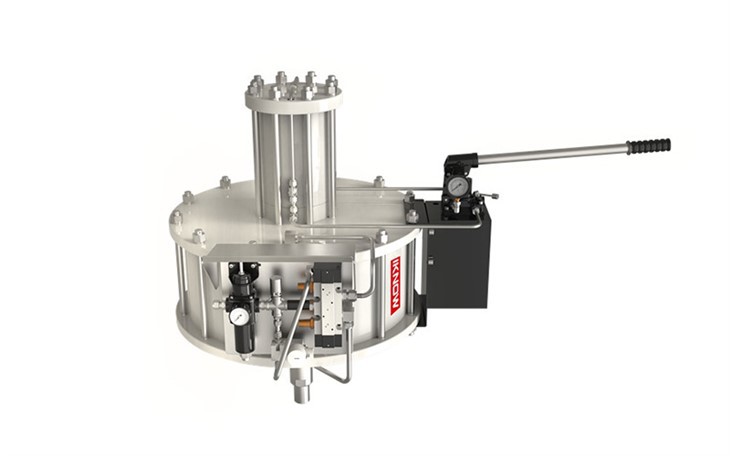
Calculating Load - Bearing Capabilities
Calculating the load - bearing capabilities of a pneumatic linear actuator isn't always straightforward. It involves taking into account the factors we mentioned earlier, such as piston size and air pressure.
The basic formula for calculating the force generated by a pneumatic linear actuator is (F = P\times A), where (F) is the force, (P) is the air pressure, and (A) is the surface area of the piston. However, this is a simplified formula, and in real - world applications, you also need to consider other factors like friction, the efficiency of the actuator, and the type of load (e.g., static or dynamic).
If you're not sure how to calculate the load requirements for your application, don't worry! Our team of experts is always here to help. We can analyze your specific needs and recommend the right pneumatic linear actuator for you.
Choosing the Right Pneumatic Linear Actuator
When it comes to choosing the right pneumatic linear actuator for your application, there are a few things to keep in mind.
First, you need to accurately assess the load requirements. This includes understanding the weight of the object you need to move, as well as any additional forces such as friction or inertia.
Second, consider the operating environment. If the actuator will be used in a harsh environment, such as a dirty or wet area, you'll need an actuator that is resistant to corrosion and damage.
Finally, think about the cost. You don't want to over - invest in an actuator that is more powerful than you need, but at the same time, you don't want to buy a cheap actuator that won't perform reliably.
If you're in the market for a pneumatic linear actuator, or if you have any questions about our products and their load - bearing capabilities, we'd love to hear from you. Contact us to discuss your specific needs, and we can help you find the perfect pneumatic linear actuator for your application. Whether it's a small - scale project or a large - scale industrial operation, we've got you covered.
References
- "Pneumatic Technology Handbook"
- "Industrial Automation Handbook"
- "Robotics: Design, Control, and Applications"