

What are the materials used in the construction of a fail close pneumatic actuator?
Dec 03, 2025
Leave a message
A fail-close pneumatic actuator is a crucial component in many industrial systems, designed to ensure safety and control by closing a valve or damper when there is a loss of air pressure. As a supplier of fail-close pneumatic actuators, I understand the importance of using high-quality materials in their construction. In this blog post, I will discuss the various materials commonly used in the manufacturing of fail-close pneumatic actuators, their properties, and why they are essential for the reliable operation of these devices.
Aluminum
Aluminum is one of the most widely used materials in the construction of fail-close pneumatic actuators. It is a lightweight metal with excellent corrosion resistance, making it ideal for use in harsh environments. Aluminum actuators are easy to handle and install, which reduces labor costs and installation time. Additionally, aluminum has good thermal conductivity, which helps to dissipate heat generated during operation, preventing overheating and extending the lifespan of the actuator.
The high strength-to-weight ratio of aluminum allows for the design of compact and efficient actuators. This is particularly important in applications where space is limited, such as in the oil and gas industry or in chemical processing plants. Aluminum actuators can be easily machined and fabricated into complex shapes, enabling the customization of actuators to meet specific application requirements.
Stainless Steel
Stainless steel is another popular material for fail-close pneumatic actuators, especially in applications where corrosion resistance is of utmost importance. Stainless steel is highly resistant to rust and oxidation, making it suitable for use in marine environments, food processing plants, and other industries where exposure to moisture and chemicals is common.
There are different grades of stainless steel available, each with its own unique properties. For example, 304 stainless steel is a general-purpose grade that offers good corrosion resistance and mechanical properties. 316 stainless steel, on the other hand, contains molybdenum, which provides enhanced corrosion resistance in harsh environments, such as those containing chlorides.
Stainless steel actuators are more expensive than aluminum actuators, but they offer superior durability and longevity. They are also more resistant to wear and tear, which reduces maintenance costs over the life of the actuator. In addition, stainless steel has a high aesthetic appeal, making it a popular choice for applications where the appearance of the actuator is important.
Carbon Steel
Carbon steel is a strong and durable material that is commonly used in the construction of fail-close pneumatic actuators. It has high tensile strength and can withstand high pressures, making it suitable for use in heavy-duty applications. Carbon steel actuators are typically more cost-effective than stainless steel actuators, making them a popular choice for applications where cost is a major consideration.
However, carbon steel is prone to corrosion, especially in environments where moisture and oxygen are present. To prevent corrosion, carbon steel actuators are often coated with a protective layer, such as paint or zinc plating. This coating helps to protect the surface of the actuator from rust and oxidation, extending its lifespan.
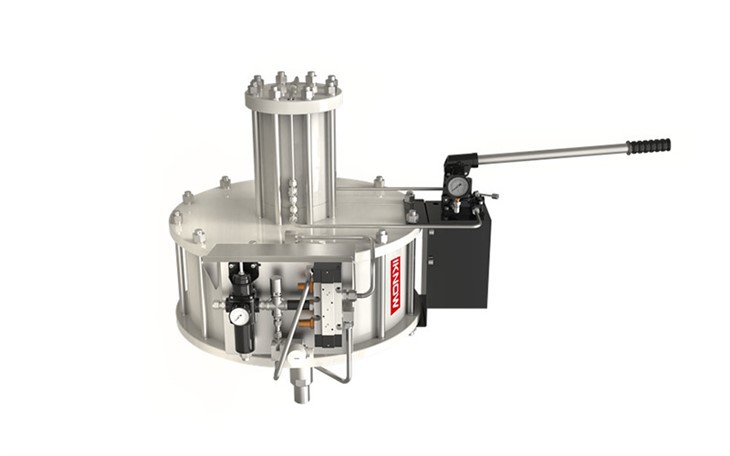

Cast Iron
Cast iron is a traditional material that has been used in the manufacturing of actuators for many years. It is a strong and rigid material that can withstand high loads and pressures. Cast iron actuators are known for their durability and reliability, making them a popular choice for applications in the power generation, water treatment, and mining industries.
One of the main advantages of cast iron is its ability to absorb vibrations and shocks, which helps to reduce noise and wear on the actuator. Cast iron also has good heat retention properties, which can be beneficial in applications where the actuator needs to operate at high temperatures.
However, cast iron is a heavy material, which can make it difficult to handle and install. It is also more prone to cracking and breaking than other materials, especially if it is subjected to sudden impacts or excessive loads.
Plastics
Plastics are increasingly being used in the construction of fail-close pneumatic actuators, especially in applications where weight reduction, corrosion resistance, and cost-effectiveness are important. There are several types of plastics that are commonly used in actuator manufacturing, including polycarbonate, nylon, and polyethylene.
Polycarbonate is a strong and transparent plastic that offers excellent impact resistance and optical clarity. It is often used in the construction of actuator covers and housings, providing protection for the internal components while allowing for easy visual inspection.
Nylon is a lightweight and strong plastic that has good chemical resistance and low friction properties. It is commonly used in the manufacture of seals, gaskets, and other components that require a high degree of precision and durability.
Polyethylene is a flexible and durable plastic that is resistant to moisture, chemicals, and UV radiation. It is often used in the construction of tubing and hoses, providing a reliable and cost-effective solution for pneumatic systems.
Elastomers
Elastomers are rubber-like materials that are used in the construction of seals, gaskets, and diaphragms in fail-close pneumatic actuators. They are essential for preventing leaks and ensuring the proper functioning of the actuator. Elastomers have excellent elasticity and resilience, which allows them to conform to irregular surfaces and maintain a tight seal under pressure.
There are several types of elastomers that are commonly used in actuator manufacturing, including nitrile rubber (NBR), fluorocarbon rubber (FKM), and silicone rubber (VMQ). Each type of elastomer has its own unique properties, making it suitable for different applications.
Nitrile rubber is a popular choice for general-purpose applications due to its good resistance to oil, fuel, and other chemicals. It also has good mechanical properties and is relatively inexpensive.
Fluorocarbon rubber is a high-performance elastomer that offers excellent resistance to heat, chemicals, and ozone. It is commonly used in applications where exposure to harsh chemicals or high temperatures is expected, such as in the chemical processing and aerospace industries.
Silicone rubber is a versatile elastomer that has good temperature resistance, electrical insulation properties, and flexibility. It is often used in applications where a high degree of flexibility and resistance to extreme temperatures is required, such as in the automotive and electronics industries.
Conclusion
In conclusion, the materials used in the construction of fail-close pneumatic actuators play a crucial role in their performance, durability, and reliability. Each material has its own unique properties and advantages, and the choice of material depends on the specific application requirements, such as the operating environment, pressure, temperature, and cost.
As a supplier of fail-close pneumatic actuators, I am committed to using high-quality materials in the manufacturing of our products. We offer a wide range of actuators made from different materials to meet the diverse needs of our customers. Whether you need an aluminum actuator for a lightweight application, a stainless steel actuator for a corrosive environment, or a cast iron actuator for a heavy-duty application, we have the solution for you.
If you are interested in learning more about our fail-close pneumatic actuators or would like to discuss your specific application requirements, please do not hesitate to contact us. Our team of experts is ready to assist you in selecting the right actuator for your needs and providing you with the best possible service.
References
- ASM International. (2004). Metals Handbook: Properties and Selection: Nonferrous Alloys and Pure Metals.
- Kutz, M. (2005). Mechanical Engineers' Handbook: Materials and Mechanical Design.
- Parker Hannifin Corporation. (2019). Sealing Technology Handbook.
We also offer a variety of related products, such as Air Piston Actuator, Pneumatic Gate Valve with Side Handwheel, and Gate Valve Pneumatic Actuator. If you have any inquiries about these products or our fail-close pneumatic actuators, feel free to reach out to us for procurement and further discussions.