

What is the difference between a fail open pneumatic actuator and an electric actuator?
Jun 03, 2025
Leave a message
What is the difference between a fail open pneumatic actuator and an electric actuator?
In the industrial automation and control field, actuators play a crucial role in converting energy into mechanical motion to control the operation of valves, dampers, and other equipment. Among the various types of actuators, fail - open pneumatic actuators and electric actuators are two commonly used options. As a fail - open pneumatic actuator supplier, I'd like to delve into the differences between these two types of actuators to help you make a more informed choice for your specific applications.
1. Working Principle
- Fail - open Pneumatic Actuator
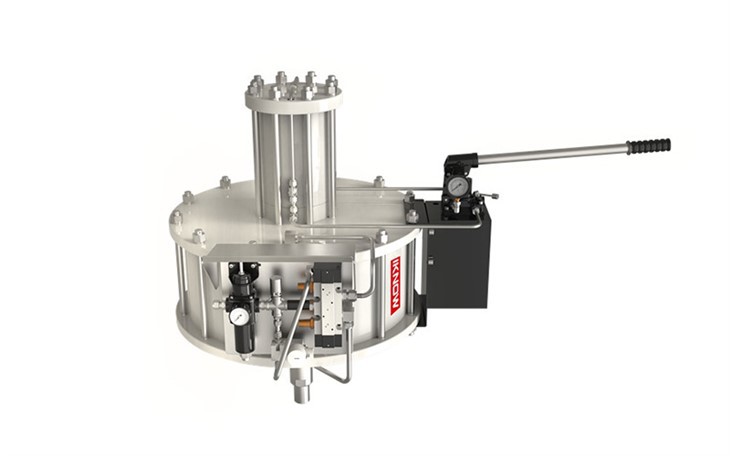
A fail - open pneumatic actuator operates using compressed air as its power source. When compressed air is supplied to the actuator, it creates a force that moves the piston or diaphragm inside the actuator. This mechanical movement is then transferred to the valve or other device it is controlling. In the event of a loss of air pressure (such as a compressor failure or a leak in the air supply system), a fail - open pneumatic actuator is designed to automatically move to the open position. This is achieved through the use of springs or other mechanical means that are pre - loaded to push the actuator to the open state when the air pressure drops. For example, in a Gate Valve Pneumatic Actuator, the compressed air overcomes the spring force to close the valve. When the air pressure is lost, the spring force pushes the valve open. - Electric Actuator
An electric actuator, on the other hand, uses electrical energy to generate mechanical motion. It typically consists of an electric motor, a gearbox, and a control mechanism. The electric motor converts electrical energy into rotational motion, which is then transformed into linear or rotary motion through the gearbox. The control mechanism regulates the speed, position, and direction of the actuator. Electric actuators can be programmed to perform specific tasks based on input signals from sensors or control systems. For instance, in a process control system, an electric actuator can be set to open or close a valve to a specific position based on the measured temperature or pressure in the system.
2. Performance Characteristics
- Speed of Operation
Pneumatic actuators generally offer faster operation speeds compared to electric actuators. Compressed air can quickly build up pressure and move the actuator components, resulting in rapid opening or closing of valves. This makes pneumatic actuators suitable for applications where fast response times are required, such as in emergency shutdown systems. In contrast, electric actuators may have slower operation speeds, especially when high torque is needed. The speed of an electric actuator is often limited by the power of the motor and the gear ratio of the gearbox. - Precision and Control
Electric actuators excel in precision and control. They can be accurately positioned to within a very small tolerance, making them ideal for applications that require precise control of valve opening or closing, such as in chemical processing plants where the flow rate of chemicals needs to be carefully regulated. Pneumatic actuators, while capable of providing a certain degree of control, may not offer the same level of precision due to factors such as air compressibility and the mechanical nature of their operation. However, with the use of advanced control systems and positioners, the precision of pneumatic actuators can be improved. - Torque and Force
Both types of actuators can generate high torque and force, but the way they do it is different. Pneumatic actuators can generate high forces relatively easily by increasing the air pressure. They are well - suited for applications that require large - scale movement or high - force operations, such as in large - diameter gate valves. Electric actuators can also generate high torque, but this often requires a larger and more powerful motor, which can increase the cost and size of the actuator.
3. Safety and Reliability
- Fail - safe Operation
As the name suggests, fail - open pneumatic actuators are designed with a fail - safe feature. In the event of a power failure or loss of air supply, they will automatically open, which can be a critical safety feature in many applications. For example, in a ventilation system, a fail - open pneumatic actuator can ensure that fresh air can still enter the building in case of an emergency. Electric actuators, on the other hand, may require additional backup power sources or fail - safe mechanisms to achieve a similar level of safety. Without proper fail - safe provisions, an electric actuator may stop in its current position during a power outage, which could lead to dangerous situations in some applications. - Reliability in Harsh Environments
Pneumatic actuators are generally more reliable in harsh environments. They are less susceptible to electrical interference, moisture, and dust compared to electric actuators. Compressed air systems can be designed to be more rugged and resistant to environmental factors. Electric actuators, however, need to be protected from these elements to ensure their proper operation. In outdoor or industrial settings where there is a high risk of exposure to moisture, dust, or corrosive substances, pneumatic actuators may be a more reliable choice.
4. Cost Considerations
- Initial Investment
The initial cost of a pneumatic actuator is often lower than that of an electric actuator. Pneumatic actuators have simpler designs and fewer components, which reduces their manufacturing cost. Additionally, the cost of installing a compressed air system is relatively low compared to the cost of an electrical power supply system required for electric actuators. However, the cost of maintaining a compressed air system, including the compressor, filters, and piping, should also be taken into account. - Operating Costs
The operating costs of pneumatic actuators mainly consist of the cost of compressed air generation. Compressed air systems can be energy - intensive, especially if they are not properly maintained or designed. Electric actuators, on the other hand, consume electrical energy, and their operating costs depend on the power consumption of the motor. In general, electric actuators may have lower operating costs in applications where they are used for long - term, continuous operation, while pneumatic actuators may be more cost - effective for intermittent or short - term use.
5. Applications
- Suitability for Different Industries
Pneumatic actuators are widely used in industries such as food and beverage, pharmaceuticals, and automotive manufacturing. In the food and beverage industry, the clean and safe nature of compressed air makes pneumatic actuators a preferred choice for controlling valves in production lines. In the automotive industry, pneumatic actuators are used in assembly lines for tasks such as clamping and lifting. Electric actuators are commonly used in industries that require high precision and advanced control, such as semiconductor manufacturing, aerospace, and robotics. - Specific Use Cases
Fail - open pneumatic actuators are particularly useful in applications where safety is a top priority, such as in fire protection systems, where they can ensure that sprinkler valves open automatically in case of a fire. Electric actuators are often used in applications where remote control and automation are required, such as in building automation systems for controlling the opening and closing of blinds or HVAC dampers.
In conclusion, both fail - open pneumatic actuators and electric actuators have their own unique advantages and disadvantages. The choice between the two depends on various factors, including the specific requirements of the application, performance characteristics, safety considerations, and cost. As a supplier of fail - open pneumatic actuators, we offer a wide range of Air Piston Actuator and Direct Acting Actuator products that are designed to meet the diverse needs of our customers. If you are interested in learning more about our products or need assistance in selecting the right actuator for your application, please feel free to contact us for a detailed discussion and procurement negotiation.

References
- "Industrial Automation Handbook", John Wiley & Sons
- "Pneumatic Systems Design and Application", Elsevier
- "Electric Actuators: Principles and Applications", CRC Press