

What is the response time of a fail close pneumatic actuator?
Jul 10, 2025
Leave a message
Hey there! As a supplier of fail close pneumatic actuators, I often get asked about the response time of these nifty devices. So, let's dig into what response time really means and how it impacts the performance of fail close pneumatic actuators.
First off, what's a fail close pneumatic actuator? Well, it's a type of actuator that uses compressed air to move a valve or other mechanical component. The "fail close" part means that in the event of a loss of air pressure or power, the actuator will automatically close the valve to prevent the flow of fluid or gas. These actuators are used in a wide range of industries, from oil and gas to manufacturing and beyond.
Now, let's talk about response time. In simple terms, the response time of a fail close pneumatic actuator is the time it takes for the actuator to move from its fully open position to its fully closed position (or vice versa) in response to a control signal. This is a crucial metric because it determines how quickly the actuator can react to changes in the system, which can be a matter of safety and efficiency.
There are a few factors that can affect the response time of a fail close pneumatic actuator. One of the most significant is the size and type of the actuator. Larger actuators generally have longer response times because they have more mass to move. Similarly, different types of actuators, such as Air Piston Actuator, Direct Acting Actuator, and Manual Pneumatic Actuator, can have different response characteristics based on their design and operating principles.
Another important factor is the air pressure and flow rate supplied to the actuator. Higher air pressure and flow rates can generally result in faster response times because they provide more force to move the actuator. However, it's important to ensure that the air supply is properly sized and regulated to avoid damaging the actuator or causing other issues.
The load on the actuator also plays a role in its response time. If the actuator is required to move a heavy or resistant load, it will take longer to reach its fully open or closed position. This is why it's crucial to select an actuator that is appropriately sized for the application to ensure optimal performance.

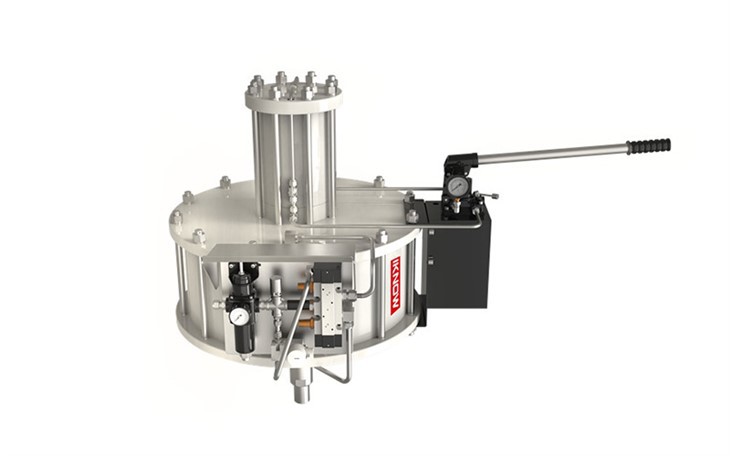
The control system used to operate the actuator can also impact its response time. A well-designed control system can send precise and timely signals to the actuator, which can help reduce the response time. On the other hand, a poorly designed or malfunctioning control system can cause delays or erratic behavior.
So, how do you measure the response time of a fail close pneumatic actuator? There are a few methods that can be used, but one of the most common is to use a high-speed camera or a position sensor to record the movement of the actuator in response to a control signal. The time between the start of the control signal and the moment when the actuator reaches its fully open or closed position can then be measured and analyzed.
In practical applications, the required response time of a fail close pneumatic actuator can vary widely depending on the specific requirements of the system. For example, in a safety-critical application, such as a fire suppression system, a very fast response time may be required to ensure that the valve closes quickly in the event of a fire. On the other hand, in a less critical application, such as a simple flow control system, a slightly longer response time may be acceptable.
As a supplier of fail close pneumatic actuators, we understand the importance of providing actuators with reliable and predictable response times. That's why we carefully design and test our actuators to ensure that they meet or exceed the performance requirements of our customers. We also offer a range of options and configurations to allow our customers to select the actuator that is best suited for their specific application.
If you're in the market for a fail close pneumatic actuator, it's important to consider the response time as one of the key factors in your decision-making process. Make sure to work with a reputable supplier who can provide you with accurate information about the response time of their actuators and who can help you select the right actuator for your application.
If you have any questions or would like to discuss your specific requirements, please don't hesitate to reach out to us. We're here to help you find the perfect fail close pneumatic actuator for your needs. Whether you're looking for a Air Piston Actuator, Direct Acting Actuator, or Manual Pneumatic Actuator, we've got you covered.
Let's work together to ensure that your system operates safely and efficiently. Contact us today to start the conversation about your fail close pneumatic actuator needs.
References
- Pneumatic Actuator Handbook
- Industrial Valve and Actuator Standards
- Technical Papers on Pneumatic Actuator Performance