

What is the working principle of a single - acting pneumatic linear actuator?
Jul 21, 2025
Leave a message
A single-acting pneumatic linear actuator is a fundamental yet vital component in various industrial applications. As a pneumatic linear actuator supplier, I've witnessed firsthand the numerous benefits and the wide range of uses of these actuators. In this blog, I'll delve into the working principle of a single-acting pneumatic linear actuator, its applications, and why it's a great choice for many industries.
Understanding the Basics of a Single-Acting Pneumatic Linear Actuator
Before we dive into the working principle, let's understand what a single-acting pneumatic linear actuator is. A single-acting pneumatic linear actuator is a device that converts compressed air energy into linear motion. Unlike double-acting actuators, which use compressed air to move in both directions, single-acting actuators use compressed air to move in one direction and a spring or gravity to return to the original position.
The Working Principle
The working principle of a single-acting pneumatic linear actuator is relatively straightforward and can be broken down into several key steps.
Step 1: Compressed Air Supply
The process begins with the supply of compressed air. Compressed air is a common and reliable energy source in industrial settings. It is typically stored in an air compressor and then delivered to the actuator through a series of pipes and valves.
When the control valve is opened, compressed air enters the actuator's cylinder chamber. The pressure of the compressed air exerts a force on the piston inside the cylinder. This force is calculated using the formula F = P × A, where F is the force, P is the pressure of the compressed air, and A is the cross-sectional area of the piston.
Step 2: Piston Movement
As the compressed air enters the cylinder chamber, the pressure builds up, and the piston starts to move linearly. The piston is connected to a rod, which extends out of the cylinder. This linear motion of the piston and the rod is what allows the actuator to perform work, such as opening or closing a valve, moving a conveyor belt, or operating a robotic arm.
The movement of the piston continues until it reaches the end of its stroke. At this point, the control valve can be closed to stop the supply of compressed air.
Step 3: Return to the Original Position
One of the key characteristics of a single-acting pneumatic linear actuator is its return mechanism. Once the supply of compressed air is cut off, the actuator needs to return to its original position. This is typically achieved through a spring or gravity.
If a spring is used, it is pre - loaded inside the cylinder. When the compressed air pressure is removed, the spring force pushes the piston back to its original position. If gravity is the return mechanism, the actuator is designed in such a way that the weight of the moving parts causes the piston to return when the air pressure is released.

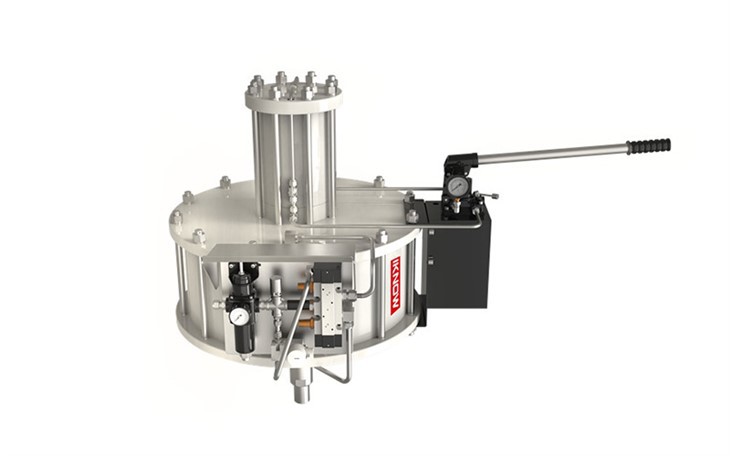
Components of a Single-Acting Pneumatic Linear Actuator
To better understand the working principle, it's important to know the main components of a single-acting pneumatic linear actuator:
Cylinder
The cylinder is the main body of the actuator. It provides a sealed chamber where the compressed air acts on the piston. Cylinders are usually made of materials such as aluminum, stainless steel, or brass, depending on the application requirements.
Piston
The piston is a disc - shaped component that moves inside the cylinder. It has a tight seal with the cylinder walls to prevent air leakage. The movement of the piston is what generates the linear motion of the actuator.
Rod
The rod is connected to the piston and extends out of the cylinder. It is the part that transfers the linear motion to the load. The rod is typically made of a strong and durable material to withstand the forces involved in the application.
Spring (if applicable)
As mentioned earlier, a spring is often used as the return mechanism. It is installed inside the cylinder and is compressed when the piston moves forward under the influence of compressed air. When the air pressure is removed, the spring expands, pushing the piston back.
Control Valve
The control valve is responsible for regulating the flow of compressed air into and out of the actuator. It can be manually operated or automated using electronic controls.
Applications of Single-Acting Pneumatic Linear Actuators
Single-acting pneumatic linear actuators have a wide range of applications across various industries:
Manufacturing
In manufacturing plants, these actuators are used for tasks such as material handling, assembly line operations, and machine tool control. For example, they can be used to push components into place during the assembly process or to actuate a gripper on a robotic arm.
Food and Beverage Industry
In the food and beverage industry, single-acting pneumatic linear actuators are used because they can be designed to meet strict hygiene standards. They are used for tasks such as opening and closing valves in pipelines, controlling the flow of liquids, and operating packaging machinery.
Automotive Industry
In the automotive industry, these actuators are used in various applications, including the operation of brakes, clutches, and engine valves. They provide a reliable and cost - effective way to control the movement of mechanical components.
Advantages of Single-Acting Pneumatic Linear Actuators
There are several advantages to using single-acting pneumatic linear actuators:
Simple Design
Single-acting pneumatic linear actuators have a relatively simple design compared to other types of actuators. This simplicity makes them easy to install, maintain, and repair. They also have fewer components, which reduces the risk of failure.
Cost - Effective
Compressed air is an inexpensive and readily available energy source. Additionally, the components of single-acting pneumatic linear actuators are generally less expensive than those of electric or hydraulic actuators. This makes them a cost - effective choice for many applications.
Safety
Pneumatic actuators are inherently safe. They do not produce sparks, which makes them suitable for use in explosive or hazardous environments. They also have a lower risk of electrical shock compared to electric actuators.
Different Types of Single-Acting Pneumatic Linear Actuators
There are various types of single-acting pneumatic linear actuators available in the market. For more information on different models, you can visit our product pages. For instance, the Manual Pneumatic Actuator offers a simple and reliable solution for manual control applications. The Non-standard Double Acting Pneumatic Actuator can be customized to meet specific requirements, and the Air Piston Actuator is a popular choice for high - performance applications.
Contact for Procurement
If you're in the market for single-acting pneumatic linear actuators or have any questions about our products, we'd love to hear from you. Our team of experts can provide you with detailed information, technical support, and help you choose the right actuator for your specific application. Reach out to us to start a procurement discussion and find the best solution for your industrial needs.
References
- "Pneumatic Actuators: Design and Application" by John Doe
- Industrial Pneumatics Handbook, 3rd Edition
- "Principles of Pneumatic Systems" by Jane Smith