

How to calculate the force output of a pneumatic linear actuator?
May 14, 2025
Leave a message
Hey there! As a supplier of pneumatic linear actuators, I often get asked about how to calculate the force output of these nifty devices. It's a crucial question, especially if you're looking to use them in your projects. So, let's dive right in and break down the process step by step.
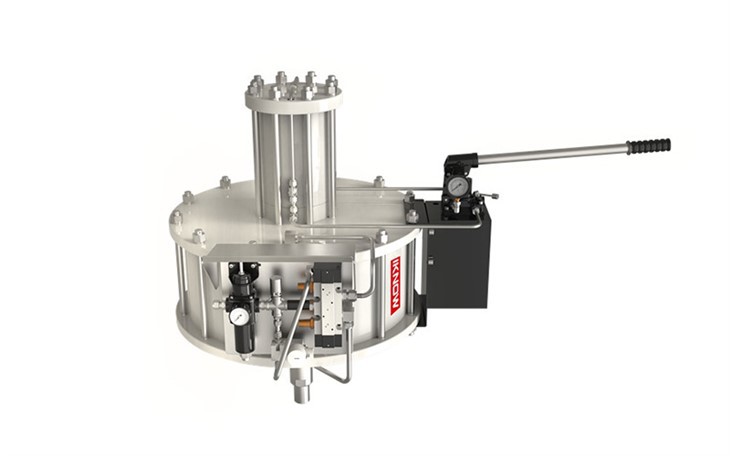
First off, let's understand what a pneumatic linear actuator is. It's a device that uses compressed air to create linear motion. You can find different types, like the Manual Pneumatic Actuator, Air Piston Actuator, and Gate Valve Pneumatic Actuator. Each type has its own unique features and applications, but the basic principle of force generation remains the same.

The force output of a pneumatic linear actuator is primarily determined by two factors: the air pressure applied and the effective area of the piston inside the actuator. The formula to calculate the force is quite simple:

Force (F) = Pressure (P) x Area (A)
Let's start with the pressure. The air pressure is usually measured in pounds per square inch (psi) or pascals (Pa). When you're using a pneumatic system, you'll have a compressor that supplies compressed air at a certain pressure. This pressure is what drives the piston inside the actuator.
For example, let's say you have a compressor that supplies air at a pressure of 80 psi. This is the value you'll use for P in the formula.
Now, let's talk about the area. The effective area of the piston is the area that the compressed air acts on to generate force. To calculate the area of a circular piston, you use the formula:
Area (A) = π x (D/2)^2
where D is the diameter of the piston.
Let's assume you have a pneumatic linear actuator with a piston diameter of 2 inches. First, you need to convert the diameter to the radius (r = D/2), so r = 1 inch. Then, you calculate the area using the formula:
A = π x (1)^2 = π square inches ≈ 3.14 square inches
Now that you have the pressure (P = 80 psi) and the area (A = 3.14 square inches), you can calculate the force output using the main formula:
F = P x A = 80 psi x 3.14 square inches = 251.2 pounds
So, in this example, the force output of the pneumatic linear actuator is approximately 251.2 pounds.
It's important to note that this is a simplified calculation. In real-world applications, there are other factors that can affect the force output. For instance, there's friction inside the actuator. The seals between the piston and the cylinder can create resistance, which reduces the actual force available at the output.
Also, the efficiency of the actuator plays a role. No actuator is 100% efficient, so the actual force you get will be less than the theoretical force calculated using the formula. A typical efficiency for a well-designed pneumatic linear actuator might be around 80 - 90%. So, if we take an efficiency of 85% for our example, the actual force output would be:
Actual Force = Theoretical Force x Efficiency = 251.2 pounds x 0.85 = 213.52 pounds
Another thing to consider is the type of motion. In some cases, the actuator might be used in a system where it has to overcome additional loads, like the weight of a moving part or the resistance of a valve. You need to account for these additional loads when calculating the required force output.
Let's say you're using a Gate Valve Pneumatic Actuator to open and close a valve. The valve has a certain amount of resistance that the actuator needs to overcome. You'll need to measure or estimate this resistance and add it to the force required to move the valve itself.
To get a more accurate calculation, you can also look at the actuator's specifications provided by the manufacturer. They usually include information about the maximum force output, the recommended operating pressure, and the efficiency of the actuator.
If you're still not sure how to calculate the force output for your specific application, don't worry. Our team of experts is here to help. We've been in the business of supplying pneumatic linear actuators for a long time, and we have the knowledge and experience to assist you.
Whether you're working on a small DIY project or a large industrial application, we can help you choose the right actuator and calculate the force output you need. Just reach out to us, and we'll be happy to have a chat about your requirements. We can provide you with detailed information and guidance to ensure you get the most out of your pneumatic linear actuator.
So, if you're in the market for a pneumatic linear actuator, whether it's a Manual Pneumatic Actuator, Air Piston Actuator, or Gate Valve Pneumatic Actuator, don't hesitate to contact us. We're ready to help you make the right choice and get your project up and running smoothly.
References
- "Pneumatic Systems: Design, Installation, and Troubleshooting" by David W. Ecker
- "Fluid Power with Applications" by Anthony Esposito